On this page
A 10-year-old Lab mix named Otis came into my exam room last winter because his owner had started him on homemade bone broth after reading it would “rebuild his joints.” Otis was 71 pounds, arthritic in both hips, and the broth was, by her account, the only supplement he’d tolerate without turning up his nose. I ran bloodwork anyway, because that’s the habit: a chem panel, a look at his BUN and creatinine given the extra sodium load she was pouring over his food, and a frank conversation about what broth can and can’t do. It hydrated him. He liked it. It was not, on the dose she was giving, doing anything measurable for his cartilage. That gap between what an owner believes a food is doing and what the label or the literature can actually support is the entire reason this comparison exists.
The Verdict, Up Front: A Checklist
- If you want hydration, palatability, and a low-risk way to get a picky senior dog to eat — bone broth is a reasonable, low-cost choice.
- If you want a measured, labeled dose of collagen aimed at joint support — a purpose-built collagen supplement, not broth, is the only one of the two that gives you a known quantity per serving.
- If your dog has kidney disease or is on a sodium-restricted diet — check the sodium content of any broth before adding it; homemade batches vary widely and are rarely tested.
- If you’re comparing products, read the label before the marketing copy. Look for a stated collagen type, a milligram or gram amount per serving, and — per the National Animal Supplement Council — the NASC Quality Seal or an FDA-registered cGMP facility, which are currently the most reliable third-party quality signals available for pet supplements.
- Neither is a substitute for a diagnosed arthritis treatment plan. Both are structure/function support, not therapy.
What Broth Actually Puts in the Bowl
Bone broth is simmered bone, connective tissue, and often marrow, and the collagen that leaches out during a long simmer breaks down partially into gelatin — a related but not identical molecule. According to the AKC, bone broth is a natural source of glucosamine, chondroitin, and hyaluronic acid alongside collagen, and it’s also rich in minerals like calcium, phosphorus, magnesium, and potassium. That’s a genuinely useful nutrient profile. What it is not is a controlled dose. Simmer time, bone type, water ratio, and whether cartilage-rich joints or marrow bones were used all change the collagen and mineral yield from batch to batch, even within the same kitchen. There’s no reference range for “how much collagen is in this jar” the way there is for an analyte on a chemistry panel — you’re estimating, not dosing.
What a Collagen Supplement Adds That Broth Can’t
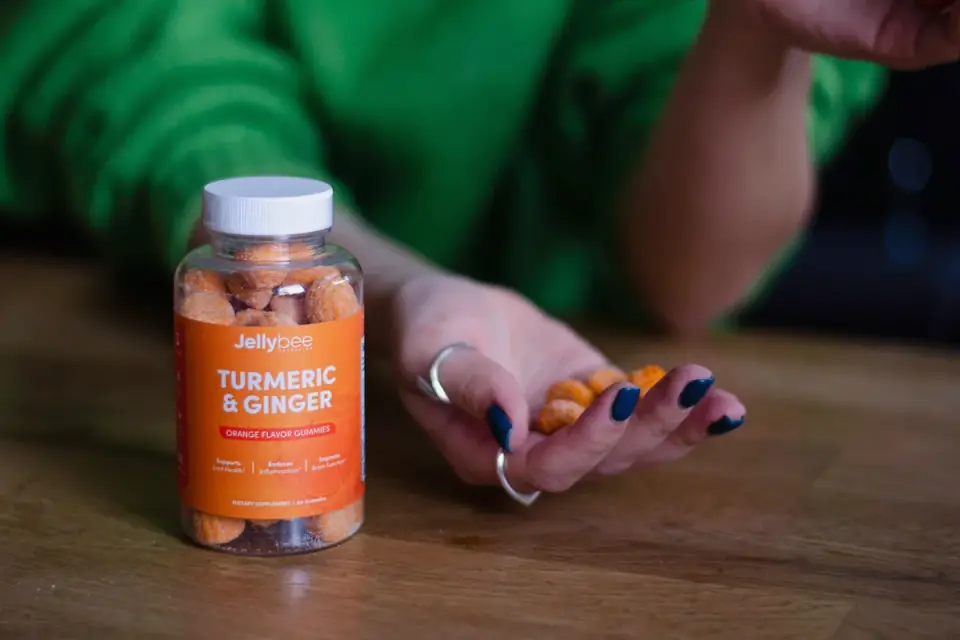
A purpose-built collagen supplement — usually hydrolyzed collagen peptides, sometimes labeled bioactive collagen peptides (BCP) — is broken down further than the gelatin in broth, into smaller peptide fragments that are easier to absorb intact. This isn’t marketing language; it’s the mechanism the research actually tests. A study in PLOS ONE evaluated oral bioactive collagen peptides in dogs with naturally occurring osteoarthritis and found measurable gait and quality-of-life improvements compared with dogs given omega-3 fatty acids and vitamin E. A broader look at the evidence, the narrative review on Journal of Animal Physiology and Animal Nutrition, describes collagen hydrolysates as capable of anabolic and potentially disease-modifying effects on osteoarthritic cartilage, while also noting that effects on cartilage-metabolism biomarkers remain inconclusive. That’s the honest read: preliminary, real, but not settled. What a labeled supplement gives you that broth doesn’t is a stated milligram amount per serving, which is what lets you actually track dose against a dog’s weight the way you would any other structure/function ingredient.
Why “It’s All Collagen Anyway” Doesn’t Hold Up
The most common thing I hear in the exam room is some version of “collagen is collagen, so the broth should work the same way.” It doesn’t, for two reasons. First, dose: broth gives you an unmeasured amount of partially-broken-down gelatin; a supplement gives you a stated amount of more fully hydrolyzed peptide. Second, form matters for absorption — the research behind collagen peptides specifically tests the hydrolyzed form, not simmered gelatin, so extrapolating the clinical findings backward onto a homemade broth is a leap the studies don’t support. Broth can still be a fine part of a senior dog’s routine. It just isn’t the same intervention, and treating it as an interchangeable substitute for a dosed joint supplement is where I see owners get the sequencing backward — reaching for the broth first because it’s palatable and delaying the conversation about an actual joint-support product until the dog is already limping more than they’d like to admit.
What I Watch For in Recheck Visits
The dogs I track most closely on this question are the ones already flagged for early joint changes on a wellness exam — thickened joint capsules, a subtle asymmetry in stride, nothing dramatic yet. In one case, a 62-pound 8-year-old Golden Retriever named Fern had started “slow-rolling” off the porch steps instead of taking them in one motion, something her owner only noticed because Fern used to beat the mail carrier to the fence every morning and had quietly stopped. We started a labeled hydrolyzed collagen product at the dose on the package, kept her existing bone broth in the rotation for hydration, and rechecked her gait and comfort at eight weeks rather than guessing. That eight-week window matters — it’s long enough to see a real trend and short enough that you’re not wasting months on something that isn’t working. I don’t present that as proof the supplement was the cause of any change Fern’s owner reported; one dog is a case, not a trial. But it’s the sequence I’d recommend to any owner asking this same question, and it only works if you’re tracking a known dose against something you can actually observe.
The Sequence I’d Actually Recommend
Start by deciding what problem you’re solving. If it’s hydration, appetite, or a picky eater, bone broth earns its place — just check the sodium if your dog has kidney or cardiac disease. If it’s joint support specifically, choose a labeled collagen product, confirm the collagen type and dose on the label, and prioritize one carrying the NASC seal or made in a cGMP facility. If you’re buying online, it’s worth knowing that the platform matters almost as much as the label — our comparison of Amazon marketplace listings versus brand-direct websites walks through why the same product name doesn’t always guarantee the same product. And if your dog’s stiffness pattern is making you wonder whether you’re dealing with arthritis at all rather than ordinary aging, our guide to arthritis versus normal aging stiffness is the more useful next stop before you spend money on either product. For small dogs on a chew-based collagen product, portioning matters too — see our piece on splitting multiple different chews for a small dog if you’re trying to dose down from a size made for a 60-pound dog.
Where This Lands
Bone broth and a collagen supplement are not competing for the same job, and that’s the part the “which one is better” framing gets wrong. Broth is food-adjacent: palatable, hydrating, nutrient-rich, unmeasured. A collagen supplement is a dosed structure/function product with a growing, still-preliminary evidence base behind the hydrolyzed form specifically. My call for a dog with early joint changes is to keep the broth if your dog already loves it, but don’t let it stand in for a labeled joint supplement you can actually track. Read the label and the bloodwork before you decide either one is doing what the marketing claims — that’s true whether the container says “broth” or “collagen peptides,” and it’s the only way to know if what you’re feeding is actually reaching the joint you’re worried about.
Frequently asked questions
Can I give my dog both bone broth and a collagen supplement?
Yes. They aren't redundant — broth adds hydration and flavor, while a labeled collagen supplement gives you a measurable dose aimed at joint support. Just account for the broth's sodium if your dog has kidney or heart disease.
Is homemade bone broth as effective as a collagen supplement for joint support?
There's no way to know, because homemade broth has no stated collagen amount per serving. The research on joint benefits has been done on hydrolyzed collagen peptides at known doses, not on simmered broth.
What should I check on a collagen supplement label before buying?
The collagen type, the milligram or gram amount per serving, and a quality indicator like the NASC Quality Seal or an FDA-registered cGMP facility.
Sources
- Bone Broth for Dogs: A Superfood With Many Benefits — AKC
- The oral intake of specific Bioactive Collagen Peptides (BCP) improves gait and quality of life in canine osteoarthritis patients — PLOS ONE
- Collagen Hydrolysates as Nutritional Support in Canine Osteoarthritis: A Narrative Review — Journal of Animal Physiology and Animal Nutrition
- National Animal Supplement Council — NASC