
On this page
- The myth: pills and shots are just two delivery systems for the same idea
- What the injectable’s evidence actually says
- What the oral evidence actually says — and where it gets thin
- Quality still matters, even for the products that aren’t drugs
- The sequence I actually recommend
- Where this leaves the verdict
A twelve-year-old Labrador named Otis came into my exam room three winters ago because he’d stopped jumping into the back of the owner’s SUV. His owner had already tried two different joint chews from the pet store, six weeks each, with no real change. On palpation, both hips had reduced range of motion and mild crepitus. That visit is where this comparison actually starts, because Otis is the dog who taught me that “joint supplement” is not one category — it’s at least two, and they don’t compete with each other so much as they answer different questions.
My call up front: if your dog has a veterinarian-diagnosed case of osteoarthritis, injectable polysulfated glycosaminoglycan is the better-evidenced starting point, and oral glucosamine/chondroitin belongs in the maintenance phase after, not as the first move. That’s not a popular answer with owners who’d rather avoid a needle, and I understand why. But I read the data the same way every time a case like Otis comes through, and the injectable keeps winning on the strength of its evidence.
The myth: pills and shots are just two delivery systems for the same idea
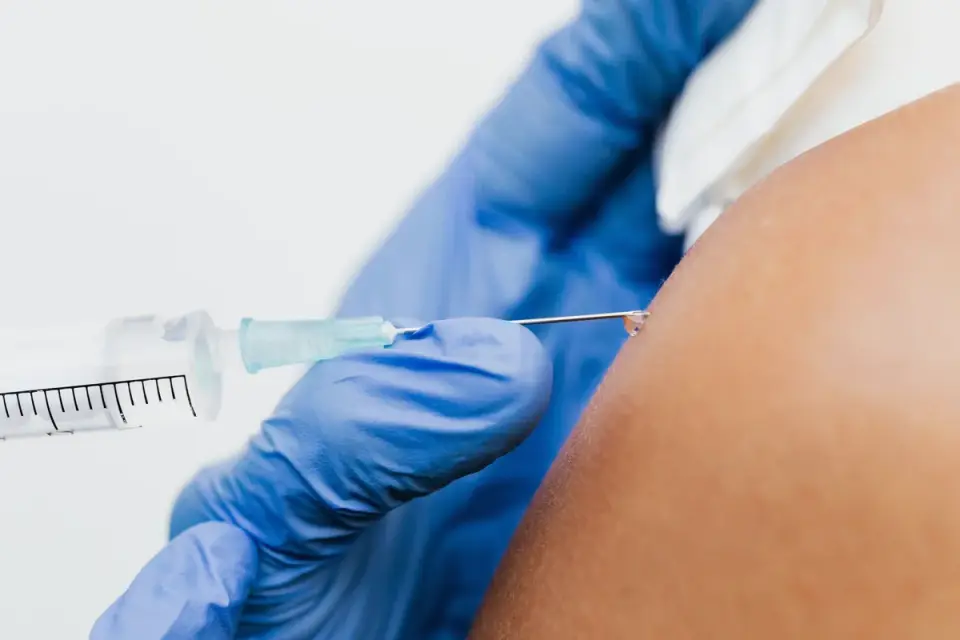
Owners frequently assume glucosamine/chondroitin chews and Adequan-type injections are interchangeable — pick whichever is more convenient. They are not built the same way, and they are not backed by the same evidence. PetMD: Adequan Canine is a prescription-only, FDA-approved injectable containing polysulfated glycosaminoglycan (PSGAG), indicated specifically for control of signs associated with non-infectious degenerative and traumatic arthritis of canine joints, dosed by a veterinarian on a fixed intramuscular schedule. Oral glucosamine and chondroitin, by contrast, are sold as unregulated dietary supplements — no FDA pre-market approval, no fixed federal dose, and enormous variation in what’s actually in the jar.
The mechanism story is different too. PSGAG is thought to work at the joint level itself — inhibiting cartilage-degrading enzymes and supporting the building blocks cartilage needs to maintain itself. Oral glucosamine and chondroitin are structure/function ingredients: they’re marketed to support normal joint and cartilage function, not to treat a diagnosed disease, and the clinical evidence behind that support is genuinely mixed.
What the injectable’s evidence actually says
Adequan Canine is the product I keep coming back to because it has something almost no oral joint supplement can claim: a formal FDA drug approval, not a supplement notification. It was reviewed and approved under a New Animal Drug Application, and its label describes it as intended for control of signs of canine degenerative and traumatic joint arthritis when given by intramuscular injection twice weekly for up to four weeks. That’s a specific, defensible claim grounded in a regulatory review process — which is a different bar than “may support joint health.”
I want to be precise about what that approval does and doesn’t mean. It means the drug’s manufacturer had to demonstrate safety and effectiveness data sufficient to satisfy FDA review for that specific indication and dosing schedule. It does not mean every dog responds, and it does not mean the injections are risk-free — they require veterinary administration, monitoring, and a diagnosis first. Owners sometimes ask me if they can just “try it” the way they’d try a chew. They can’t, and that’s actually part of what makes the evidence here stronger — a licensed veterinarian has to confirm the diagnosis before the drug gets used at all.
What the oral evidence actually says — and where it gets thin
This is where I have to be honest with owners, because it’s not what most joint-chew marketing implies. A PubMed: review of glucosamine and chondroitin use in canines for osteoarthritis found the evidence around efficacy is mixed, with a shortage of well-designed veterinary clinical trials investigating the true treatment effect — despite how commonly these ingredients are recommended. One placebo-controlled trial of dogs with hip osteoarthritis found that after four weeks, the glucosamine/chondroitin group showed no significant increase in peak vertical force on force-plate gait analysis, performing similarly to placebo, while a marine fatty acid compound and a prescription NSAID both showed measurable improvement over the same period, according to the randomized trial published via PubMed Central. Other, older trials have shown modest pain and weight-bearing improvements with glucosamine/chondroitin by around day 70 — slower onset than a prescription NSAID, but a real signal in some dogs.
So the honest read: oral glucosamine and chondroitin are reasonable structure/function support, and some dogs do seem to respond over weeks to months. They are not shown to move a force-plate measurement of lameness the way a prescription NSAID does, and they are not a substitute for a diagnostic workup when a dog is actually painful.
In my practice, I tell owners that a normal-aging dog who’s just a little slower on stairs is a very different case from a dog who’s stopped jumping, is reluctant to rise after resting, or has a visible limp. The first dog is often a reasonable candidate to start with a well-made oral supplement and reassess in six to eight weeks. The second dog needs a gait and orthopedic exam first, radiographs if indicated, and a real conversation about whether PSGAG injections belong in the plan — because waiting six weeks on a chew while cartilage keeps degrading is time that dog doesn’t get back.
Quality still matters, even for the products that aren’t drugs
Because oral joint supplements aren’t FDA-approved drugs, the manufacturing and testing behind them varies widely, and that variability is where I’ve seen owners get burned — not on the ingredient itself but on whether the jar actually contains what the label says. Look for the NASC Quality Seal on any oral joint product you’re considering; National Animal Supplement Council membership requires facility audits, adverse-event reporting, and independent product testing, which is closer to real quality assurance than an unverified supplement gets. It doesn’t turn a supplement into a drug, and it won’t replace a diagnostic workup, but it does reduce the odds you’re paying for an underdosed or contaminated product. Format also matters for consistency of intake — our guide on chew vs. powder vs. liquid supplement forms walks through how absorption and dosing accuracy differ by format, and it’s relevant background before you commit to a maintenance product.
The sequence I actually recommend
Start with the diagnosis, not the product aisle. If your dog is genuinely limping, reluctant to rise, or has stopped doing something it used to do without effort, get an orthopedic exam before buying anything — our piece on arthritis vs. normal aging stiffness in dogs is a useful gut-check on which pattern you’re actually seeing. If arthritis is confirmed, ask your vet directly whether a PSGAG injection series is appropriate — it’s the option with the strongest regulatory-grade evidence behind it for that specific indication. If your dog is an earlier-stage or preventive case, a well-made, NASC-sealed oral glucosamine/chondroitin product is a defensible structure/function choice, understanding that the trial data on measurable lameness improvement is mixed rather than strong. Whichever oral product you land on, buy it from the manufacturer or an authorized retailer rather than an unverified third-party marketplace listing — our comparison of Amazon Marketplace vs. brand-direct websites for dog supplements covers why that choice affects what’s actually in the bottle.
I’ve watched this play out enough times to trust the pattern: owners who skip the diagnostic step and go straight to a chew often come back three months later no better off, having lost real time. Owners who get the diagnosis first, then choose the right tool for where their dog actually is, tend to be the ones who see a genuine change in how their dog moves.
Where this leaves the verdict
Otis ended up on an eight-injection PSGAG series over four weeks, then transitioned to a maintenance oral joint supplement once his gait improved and his owner wanted a lower-effort long-term plan. That sequencing — drug first for the diagnosed problem, supplement second for maintenance — is the pattern I expect to keep recommending as more force-plate and long-term outcome data comes in on both categories. The oral supplement market is only going to get more crowded, and I’d rather owners walk in knowing which claims are backed by a regulatory approval and which are still structure/function language waiting on better trials, than have that distinction discovered the hard way.
Frequently asked questions
Can I use an oral joint supplement instead of prescribed chondroprotectant injections?
Not if your dog has diagnosed osteoarthritis. Oral glucosamine and chondroitin are structure/function supplements with mixed clinical trial evidence, while injectable PSGAG is an FDA-approved prescription drug for that specific indication. Ask your veterinarian which fits your dog's stage of disease.
How long does it take to see a difference from oral glucosamine and chondroitin?
Trials that showed a benefit generally measured improvement around six to ten weeks of consistent use, with slower onset than prescription NSAIDs. If you see no change after eight weeks, revisit the plan with your vet.
Is the NASC seal the same as FDA approval?
No. The NASC Quality Seal reflects third-party manufacturing and quality-control audits for supplement companies; it doesn't mean the product is an FDA-approved drug or that efficacy has been proven in trials.
Sources
- Adequan Canine for Dogs (Polysulfated Glycosaminoglycan) — PetMD
- Glucosamine and chondroitin use in canines for osteoarthritis: A review — PubMed
- Study of the effectiveness of glucosamine and chondroitin sulfate, marine based fatty acid compounds, and carprofen for the treatment of dogs with hip osteoarthritis — PubMed Central
- National Animal Supplement Council — NASC