
On this page
I don’t start with the ingredient. I start with the gut wall, because that’s where most of what goes wrong actually goes wrong first — not in the stool, in the lining underneath it.
My call up front: for a dog with a leaky, inflamed gut — post-antibiotic, post-GI-upset, or chronically loose — I reach for bovine colostrum before I reach for a probiotic. For a dog with a stable gut that just needs its microbial population nudged back toward normal after a course of antibiotics or a diet change, probiotics are the better-targeted tool. They are not competitors for the same job. Treating them as interchangeable “gut supplements” is the myth I want to take apart first.
The myth: colostrum and probiotics are two brands of the same idea — “good stuff for digestion” — so you pick whichever is cheaper or tastier. The reality: they act on different structures. Colostrum is a barrier-and-immune input; it supplies immunoglobulins, lactoferrin, and growth factors that support the intestinal lining itself. Probiotics are a population input; they supply live organisms meant to compete with and crowd out less favorable bacteria. A dog can have a perfectly reasonable microbial population and still have a compromised gut wall — and in that dog, more bacteria (even good bacteria) doesn’t fix a leaky barrier.
What colostrum is actually doing at the gut wall
Bovine colostrum is the first milk a cow produces after calving, harvested for supplement use before it’s needed for the calf. It’s dense with immunoglobulins (mainly IgG), lactoferrin, and growth factors like IGF-1 — components built to support a newborn’s undeveloped gut, which happens to overlap significantly with what an inflamed adult gut needs too.
The clearest dog-specific data point here is a controlled feeding trial published in the British Journal of Nutrition, which found that PubMed / British Journal of Nutrition: supplementing diets with bovine colostrum over roughly ten months increased fecal IgA, improved vaccine antibody response, and shifted gut microbiota diversity in adult dogs — an immune-support and barrier-support signal, not a treatment claim. That’s a structure/function result: it tells you colostrum is doing something measurable at the mucosal level, not that it cures a specific disease.
What probiotics are actually doing — and where the evidence gets thin
Probiotics are live microorganism strains — usually Lactobacillus, Bifidobacterium, or Enterococcus species formulated for dogs — meant to occupy gut real estate and produce short-chain fatty acids that keep the local environment inhospitable to overgrowth organisms.
Here’s where I’ll be blunt: the evidence is real but modest. A systematic review of PMC: clinical effect of probiotics in prevention or treatment of gastrointestinal disease in dogs, covering 17 studies split between acute and chronic disease, found a very limited and possibly clinically unimportant effect on top of standard care — with most included trials carrying moderate to high risk of bias. That doesn’t mean probiotics don’t work. It means the signal is smaller and noisier than the marketing suggests.
The stronger single result I trust is narrower: a placebo-controlled trial on PubMed: probiotic intervention in acute canine gastroenteritis found that dogs on the probiotic returned to normal stool roughly a day faster than dogs on placebo (1.3 days versus 2.2 days). That’s a real, specific, structure/function-scale benefit — for acute diarrhea, in that trial. It is not evidence that probiotics prevent chronic disease or “rebuild” a damaged gut wall.
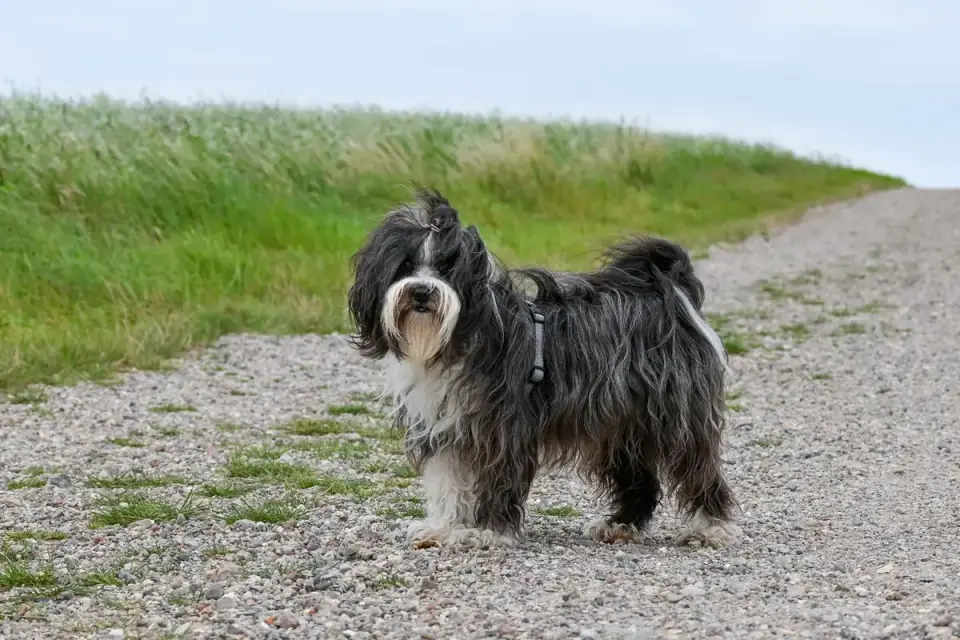
A dog I worked with brought this into focus for me. She was a nine-year-old spayed female Boxer, about 58 pounds, three weeks out from a ten-day course of clindamycin for a dental abscess. Her owner’s first complaint wasn’t diarrhea — it was that she’d started refusing her evening walk on the gravel path behind their house, standing at the door and turning back toward the kitchen instead. Stool was soft but formed, twice daily instead of the usual once. We’d already tried a probiotic through the antibiotic course, per label, and it hadn’t moved the needle much. What changed her stool consistency and, within about three weeks, her appetite for that evening walk again was adding a colostrum supplement on top — not swapping it in. I read that as a barrier-repair problem the probiotic alone wasn’t reaching, not proof that colostrum “outperforms” probiotics generally. One dog is a case, not a trial.
Why I don’t treat this as an either/or purchase decision
The sequence I actually use starts with the presenting problem, not the product aisle:
- Acute diarrhea or GI upset with an otherwise healthy dog — a probiotic with clinical-trial support behind the specific strain is reasonable first-line, alongside your vet’s standard supportive care.
- Post-antibiotic gut, chronic loose stool, or a dog recovering from a GI flare — I lean toward colostrum first, because the problem looks more like barrier and immune support than a simple population imbalance.
- A dog with recurring or worsening GI signs — this is not a supplement-only situation. Get a vet exam and, if indicated, diagnostics before layering more products on.
On format and sourcing, the category matters as much as the ingredient. If you’re choosing between a chew, powder, or liquid supplement for either colostrum or a probiotic, powders generally give you the most control over dose and are easiest to split for smaller dogs; freeze-dried formats matter more for probiotic viability specifically — see how the format changes what survives to the gut. And regardless of which ingredient you pick, look for the NASC LIVE: NASC Quality Seal, which means the company has passed a facility audit and random independent testing to confirm the product matches its label — a baseline that matters more in this loosely regulated category than most owners realize.
If your dog is already on a prescription-strength probiotic from your vet, that’s a different conversation than an over-the-counter blend — the prescription-versus-OTC probiotic distinction is worth understanding before you add anything else to the regimen. And wherever you buy either product, buying direct versus through a marketplace affects whether you’re actually getting what the label promises.
I’ll also say plainly what I reject: the idea that you need both, always, as a daily “gut stack.” Most dogs with a stable, unremarkable gut don’t need either supplement. This is a targeted-problem category, not a maintenance-multivitamin category — and treating it that way is how owners end up spending money on redundant products instead of the one that matches the actual problem.
In my practice, the dogs where I see the clearest benefit from either ingredient are the ones with a specific, recent gut insult — surgery, antibiotics, a dietary indiscretion, a stress-related flare during boarding or travel — not the dogs on a steady, boring diet with normal stool. I’ve watched owners chase a “just in case” gut supplement for a perfectly healthy dog and get, predictably, no measurable change, then conclude the whole category doesn’t work. It’s not that it doesn’t work. It’s that it wasn’t matched to a problem in the first place.
Where this leaves the verdict
Colostrum and probiotics are not rival products competing for the same slot in your cabinet — they’re different tools aimed at different layers of the same system, the gut wall and the gut flora. Match the tool to what’s actually going wrong, insist on NASC-backed sourcing either way, and loop in your vet for anything beyond a short, mild flare.
Frequently asked questions
Can I give my dog colostrum and probiotics at the same time?
Yes, they work through different mechanisms — gut barrier support versus microbial rebalancing — so there's no inherent conflict. Talk to your vet before combining supplements if your dog has an ongoing GI condition.
Which one works faster for diarrhea?
In one controlled trial, a probiotic shortened time to normal stool by about a day compared to placebo in acute gastroenteritis. Colostrum's benefits, per the available dog data, look more like a slower barrier- and immune-support effect over weeks.
Do I need a vet's involvement to try these?
For a single mild, short-lived stool change, most owners can try a targeted supplement first. For recurring, worsening, or bloody stool, or any sign of lethargy or appetite loss, see your vet before adding supplements.
Sources
- Supplementation of diets with bovine colostrum influences immune function in dogs — PubMed / British Journal of Nutrition
- Clinical effect of probiotics in prevention or treatment of gastrointestinal disease in dogs: A systematic review — PMC
- Effects of a probiotic intervention in acute canine gastroenteritis--a controlled clinical trial — PubMed
- NASC Quality Seal — NASC LIVE