
On this page
My call after years of general practice: protect the older dog’s sleep, food, and exit routes first, because access beats any calming ingredient on the shelf.
Picture a seven-year-old, 68-pound Labrador who has owned the same couch corner and backyard loop for five years, now watching an eleven-week-old shepherd mix ricochet through his kitchen. By day 4 the Lab stops finishing breakfast, lip-licks when the puppy rushes, and leaves the room to sleep in the laundry instead of his bed. The owners worry about jealousy and ask about a calming chew at checkout. I tell them the chew is secondary. What changed is predictable access to rest and resources, and until we restore that, no supplement can do the heavy lifting for a tired senior dog learning to share space.
Why does the resident dog look worse before the puppy looks better?
Stress physiology in dogs is about arousal load, not attitude. Novel movement, interrupted sleep, scent changes, and loss of alone time keep the sympathetic system up and lower the threshold for growls, hiding, appetite dips, or clinginess. Sleep fragmentation matters most in older dogs. A dog that cannot complete rest cycles startles faster and recovers slower.
That is why I weigh cost and access before the ideal. A baby gate, a closed bedroom door, and separate feeding stations cost less than most supplement bags and do more in week one. Supplements support wellness, not replace medicine or management, and they cannot replace sleep.
Separation is treatment here, not failure.
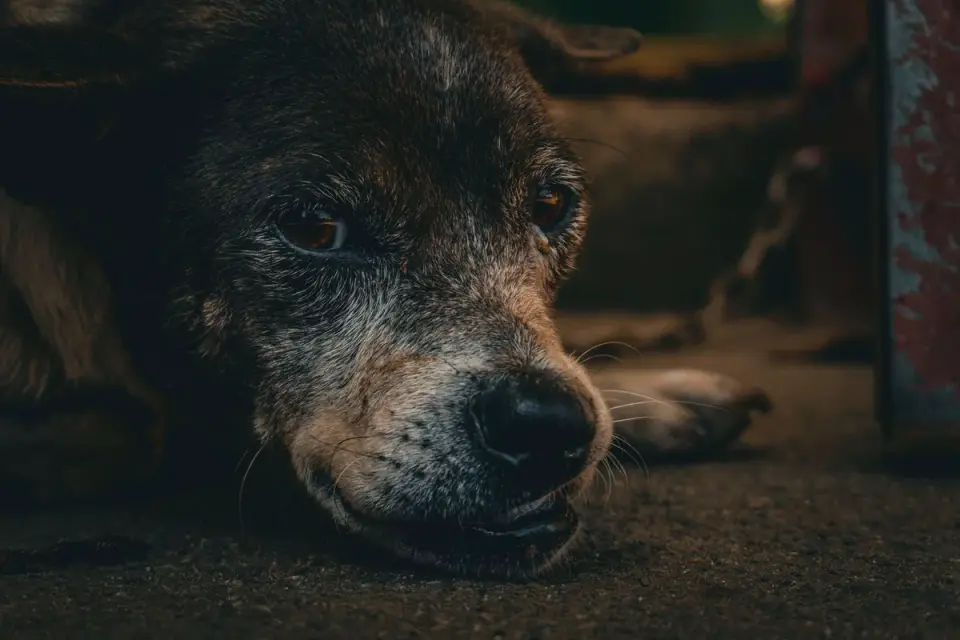
Is this dominance, jealousy, or just depleted coping?
Most of what owners label jealousy is resource guarding under fatigue: my bed, my bowl, my person, my quiet. The puppy is rude by definition. The adult corrects with hard stares, muzzle punches, or snapping, then gets labeled aggressive when it was simply out of exits.
One family tried the opposite of what I advised and paid for it. With a five-year-old, 42-pound cattle-dog mix and a new nine-week-old beagle, they forced shared walks, shared bowls, and all-day togetherness to “work it out,” hoping the older dog would teach manners. By day 10 the cattle-dog mix was growling over a water bowl she had never guarded, had chewed two door frames when left with the puppy, and refused evening walks she once loved. We reset to full separation with rotated yard time and hand-fed the adult away from the puppy for a week. Appetite returned in three days, but trust took three weeks in to rebuild, which is the timeline I now quote for forced-together starts.
What does the evidence say about calming support during the transition?
Once management is set, some owners ask about L-theanine, chamomile, valerian, or ashwagandha to take the edge off. I keep expectations plain-spoken: the dog data are thin, and much of what we have is borrowed from human or preclinical work or traditional use.
For chamomile specifically, MDPI Biomedicines notes that “For the remaining species, evidence is derived mainly from preclinical studies or traditional use.” The same review tradition is why I describe chamomile this way: “Chamomile and Valerian Root have been used in traditional herbal care to support relaxation.” That is support language, not proof of efficacy for inter-dog tension. For ashwagandha, Cureus summarized that “A systematic review analyzed multiple RCTs and concluded that ashwagandha has a moderate positive impact on stress reduction and cognitive performance.” Those were not puppy-introduction trials in dogs. For L-theanine, Nature Molecular Psychiatry flagged “except for one study on psychotic anxiety (SMD = 0.54; 400 mg/day for 8 weeks)” — a human dose signal you should not transpose onto a dog. The vet-reviewed framing I use with owners is simpler: “L-theanine is an amino acid found in tea that has been studied for its calming properties,” and “Contains KSM-66 Ashwagandha, a clinically studied form of Ashwagandha for stress support” describes ingredient history, not a guarantee of household peace.
If you want background on how I score those categories, see Dog Anxiety Supplements: What the Evidence Actually Supports and Dog Calming Chews: What the Evidence Actually Supports.
What sequence actually protects the older dog?
Lead with logistics for 14 to 21 days, then loosen only what the adult dog invites.
Keep the resident dog’s sleep spot, feeding spot, and chew spot puppy-free. Feed in separate rooms with doors closed. Give the adult two to three short solo walks or sniff sessions daily without the puppy tagging along. Use gates and crates on rotation so each dog rests undisturbed. Greet, train, and play with the adult first during week one. Reward calm disengagement — a glance away, a sigh and lie-down — more than obedience.
Introduce on neutral ground, then parallel walk with 10 to 15 feet between dogs, no face-to-face greetings. Inside, allow brief, leashed co-presence after play or a walk, then separate before arousal spikes. End every session while it is still boring.
Here is the edge case that changes the plan: a twelve-year-old, 18-pound shih tzu with cloudy eyes and stiff hips who froze, not growled, when the ten-week-old terrier rushed her bed. By week two she was drinking 30% less water because the shared bowl sat in the puppy’s play lane, and she had two nighttime house-soiling accidents she had not had in years. For deaf, painful, or anxious seniors, proximity is pressure. We moved water and a low-sided bed into a quiet bedroom with a gate the puppy could not cross, added a non-slip path, and paused all shared time for ten days. Her intake normalized by day 5, which told us management, not disobedience, was the diagnosis.
Call your veterinarian promptly for bite-level aggression, a resident dog that stops eating for more than 24 hours, panic, or any puppy with vomiting, lethargy, or missed vaccines around an under-protected adult. Supplements support wellness rather than replace medicine.
What would change if you measured success by how well the older dog sleeps this week, not how fast they play together?
Sources
- Herbal anxiolytics review — MDPI Biomedicines
- Ashwagandha stress and cognition systematic review — Cureus
- L-theanine anxiety evidence synthesis — Nature Molecular Psychiatry