
On this page
Checklist before you pick one:
- Is the goal general anxiety or reactive/aggressive behavior? L-theanine’s trial base leans toward fear and noise phobia; L-tryptophan’s strongest signal is in dominance and territorial aggression tied to diet.
- Are you changing the whole diet or adding a supplement? Tryptophan’s best evidence comes from whole-diet protein/tryptophan ratios, not an add-on capsule.
- Do you need something fast for a known trigger (storms, fireworks)? L-theanine (as Anxitane) has same-day and short-course data; tryptophan studies ran over weeks.
- How much inconsistency can you tolerate? Both ingredients have at least one trial showing no meaningful effect — neither is a guarantee.
- Is this layered onto training, or a substitute for it? Neither ingredient replaces behavior modification; both are studied as an adjunct.
I evaluate calming ingredients the way I evaluate a gait abnormality: from the movement outward, not from the marketing copy inward. A dog’s stress response shows up in posture, pacing, panting, and how the body carries itself through a trigger — the same observable markers I use to score a mobility case. That’s the lens this comparison runs through.
The myth: “amino acid calming aids are basically interchangeable”
Owners often lump L-tryptophan and L-theanine together because both are amino acids marketed as “calming,” both show up in chews next to melatonin and chamomile, and both get pitched as gentler alternatives to prescription anxiolytics. They are not interchangeable. Tryptophan is a precursor the body converts toward serotonin, and its behavioral research in dogs is mostly tangled up with total dietary protein — the ratio of tryptophan to other large neutral amino acids competing for transport into the brain matters as much as the raw dose. L-theanine, by contrast, is studied as a standalone tablet dosed on body weight, independent of the rest of the diet, and its research has centered on discrete fear triggers like thunderstorms and unfamiliar people.
What the tryptophan evidence actually supports
The foundational work here is Jean DeNapoli’s diet trial, published in the Journal of the American Veterinary Medical Association, which rotated dogs with dominance aggression, territorial aggression, or hyperactivity through low- and high-protein diets, each with or without tryptophan supplementation, for a week at a time. The finding that holds up: for dogs with dominance aggression, adding tryptophan to a high-protein diet or switching to a low-protein diet reduced aggression scores; for territorial aggression, tryptophan added to a low-protein diet helped. Hyperactivity did not respond consistently. A more recent systematic review in Veterinary Evidence reached a similarly bounded conclusion — tryptophan supplementation shows little effect in normal dogs, and studies specifically targeting anxiety or obsessive-compulsive behaviors, as opposed to aggression, found no significant benefit. A separate stress trial published in Frontiers in Veterinary Science tested tryptophan combined with CBD and alpha-casozepine and reported only a mild stress-reducing effect after a single dose, with a stronger effect after seven weeks of the same blend fed daily. That’s a diet-context finding, not a case for tryptophan alone as a fast-acting calming aid.
What the L-theanine evidence actually supports
L-theanine’s dog research is narrower in scope but more consistent within it. An open-label study of storm-sensitive, client-owned dogs given L-theanine tablets (branded Anxitane) reported a statistically significant drop in global anxiety scores from baseline to the end of the storm season, with treatment success — defined by owner-rated improvement — in the majority of dogs for drooling, panting, pacing, following, and hiding behaviors, and 94% owner satisfaction, per the trial summarized on ScienceDirect. A second, placebo-controlled study of dogs anxious around unfamiliar people found theanine-treated dogs approached and interacted more than the placebo group. Neither trial is large, and one relies on subjective owner scoring without a full control arm — a limitation flagged directly by the veterinary review site SkeptVet, which is worth reading precisely because it doesn’t sell the product it’s evaluating.
A case from my own exam room
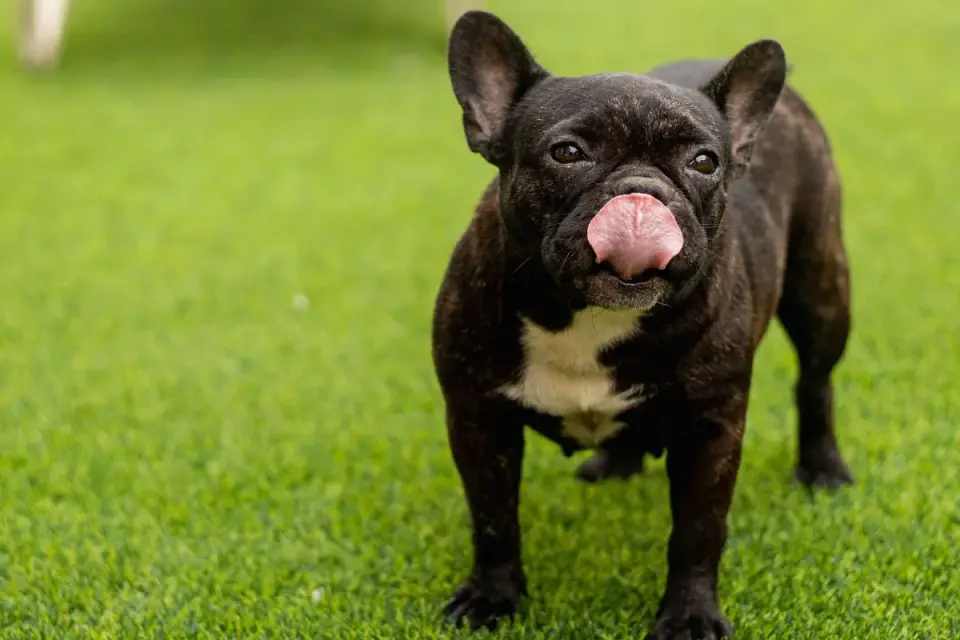
A twelve-year-old Border Collie mix I worked with — call her Juno, 38 pounds — had gone from tolerating thunderstorms to shredding a doorframe during them over the course of one summer. Her owners had already tried a thundershirt and background noise; neither held up past the first rumble. What struck me wasn’t the storm behavior itself but her gait afterward: she’d pace stiff-legged for twenty minutes, favoring a slightly shortened stride on the left hind, the kind of guarding pattern I usually see in dogs carrying low-grade orthopedic discomfort into a stress response. We started an L-theanine tablet dosed ahead of forecasted storms rather than reaching for it mid-event, alongside a short course of joint-comfort support for the hind end. Over about six weeks, her owners reported shorter pacing episodes and a return to lying down within the first few minutes of a storm rather than circling the whole time. I don’t present that as proof theanine works — it’s one dog, one season, layered with other changes — but it matches the trial pattern of dosing ahead of a known trigger rather than after the fact.
Where the evidence gets thin
Both ingredients share the same weakness: small trial numbers, short observation windows, and in tryptophan’s case, results that are hard to separate from the surrounding diet’s protein content. Neither ingredient has a large, blinded, placebo-controlled trial in dogs that would satisfy a strict evidence hierarchy. Frame both as structure/function support for a calmer stress response — never as a substitute for a veterinary behavior workup when aggression, self-injury, or severe phobia is involved.
A practical sequence for choosing between them
- If the target behavior is fear- or phobia-driven (storms, vet visits, unfamiliar people), start with L-theanine dosed ahead of the trigger, given the trial base built around exactly that use case.
- If the target behavior is aggression tied to a high-protein diet, talk to your vet about a diet-level change — lower protein with tryptophan supplementation — rather than an add-on capsule alone.
- Layer either one onto training and management, not in place of it; check formatting against a chew vs. powder vs. liquid comparison if pill-averse dogs are part of the picture.
- Buy from a source you can verify — see this site’s breakdown of Amazon Marketplace vs. brand-direct websites — since calming supplements are exactly the category where an unverified third-party listing is a real risk.
- If stiffness or a guarded gait shows up alongside anxious behavior, don’t assume it’s “just nerves” — read the difference between arthritis and normal aging stiffness before you attribute pacing to anxiety alone.
- Reassess after four to six weeks against a specific, written behavior — not a vague “seems calmer.”
Where this leaves the verdict
L-theanine has the more direct trial evidence for fear-based anxiety, dosed ahead of a known trigger, and that’s where I’d start for a storm-phobic or event-anxious dog. L-tryptophan’s real strength is narrower and diet-bound — it’s a tool for aggression tied to protein intake, best used as part of a full diet change rather than a bolt-on capsule. Neither is a cure, and both deserve the same honest framing I’d give a joint supplement: support for a calmer stress response, evaluated the way I’d evaluate any movement or behavior change — from what the dog’s body is actually doing, outward.
Frequently asked questions
Can I give L-tryptophan and L-theanine together?
There's no dog-specific trial testing the combination directly, so any decision to combine them should go through your veterinarian, especially if your dog is on other serotonergic medication.
How fast does L-theanine work for a storm-phobic dog?
The storm-sensitive dog trial dosed ahead of forecasted storms rather than during them, so plan to give it before a known trigger rather than expecting an immediate effect once anxiety has already started.
Does tryptophan work for general anxiety, not just aggression?
The stronger evidence is for aggression tied to diet, particularly dominance and territorial aggression; trials looking at general anxiety and obsessive-compulsive behavior did not find a significant effect.
Sources
- Effect of dietary protein content and tryptophan supplementation on dominance aggression, territorial aggression, and hyperactivity in dogs — Journal of the American Veterinary Medical Association
- In adult dogs is supplementary tryptophan in the diet effective in reducing signs of anxiety? — Veterinary Evidence (PMC)
- Treats containing cannabidiol, L-tryptophan and α-casozepine have a mild stress-reducing effect in dogs — Frontiers in Veterinary Science
- An open-label prospective study of the use of l-theanine (Anxitane) in storm-sensitive client-owned dogs — ScienceDirect (Journal of Veterinary Behavior)
- Evidence Update: Anxitane (L-theanine) for Anxiety in Dogs (and Cats) — SkeptVet