
On this page
- The myth: “senolytic” on a label means it’s been proven in dogs
- What quercetin actually does in aging tissue
- Where fisetin pulls ahead — and where it doesn’t
- A dog I worked with, and why the sequence matters more than the compound
- Scoring it: strong, thin, and mixed
- The sequence I actually recommend
- Where this leaves the verdict
My call up front: if I had to choose one senolytic flavonoid to discuss with an owner of an aging dog, I’d talk about fisetin before quercetin. Not because quercetin is weak, but because the dose-response and lifespan data in animal models are more convincing for fisetin, and because quercetin’s real strength shows up when it’s paired with a drug like dasatinib, not when it’s sold alone in a chew. That’s the whole verdict. The rest of this piece is the scoring behind it.
The myth: “senolytic” on a label means it’s been proven in dogs
The word senolytic gets used loosely in the supplement aisle, and it implies more certainty than the science currently offers. A true senolytic clears senescent cells, the “zombie” cells that stop dividing but keep secreting inflammatory signals into surrounding tissue. That mechanism is real and well documented in rodents. What isn’t real yet is a body of canine clinical trials proving that an oral fisetin or quercetin supplement meaningfully reduces senescent cell burden in a living dog’s joints, kidneys, or brain. A 2025 review in the Journal of Veterinary Science on anti-aging strategies for dogs is candid about this gap: most senolytic data in companion animals is preclinical or drawn from cell lines, and the authors note that species-specific validation remains necessary before extrapolating rodent or sheep findings to dogs.
What quercetin actually does in aging tissue
Quercetin is a flavonol found in apples, onions, and many dog-safe vegetables, and it has a long track record as an antioxidant before “senolytic” ever entered its vocabulary. Its senolytic role is narrower than people assume: research on the classic dasatinib-plus-quercetin (D+Q) combination shows quercetin preferentially clearing senescent endothelial cells, while dasatinib handles senescent preadipocytes. Alone, quercetin’s senolytic punch is modest. A preliminary human trial published on PMC tracking dasatinib plus quercetin in people with diabetic kidney disease reported measurable reductions in senescent cell markers with the combination, not with quercetin in isolation. That distinction matters for dog owners, because most quercetin supplements on the market aren’t paired with a companion drug, and the dog literature doesn’t yet show the same signal on its own.
There’s also a practical wrinkle: quercetin’s oral bioavailability in most standard capsule or chew forms is low, since it’s rapidly conjugated in the gut wall and liver before much of it reaches the bloodstream. That doesn’t make it useless as a general antioxidant, but it does mean the amount of “free” quercetin available to actually act on senescent cells after a normal meal-time dose is smaller than the label milligrams suggest.
Where fisetin pulls ahead — and where it doesn’t
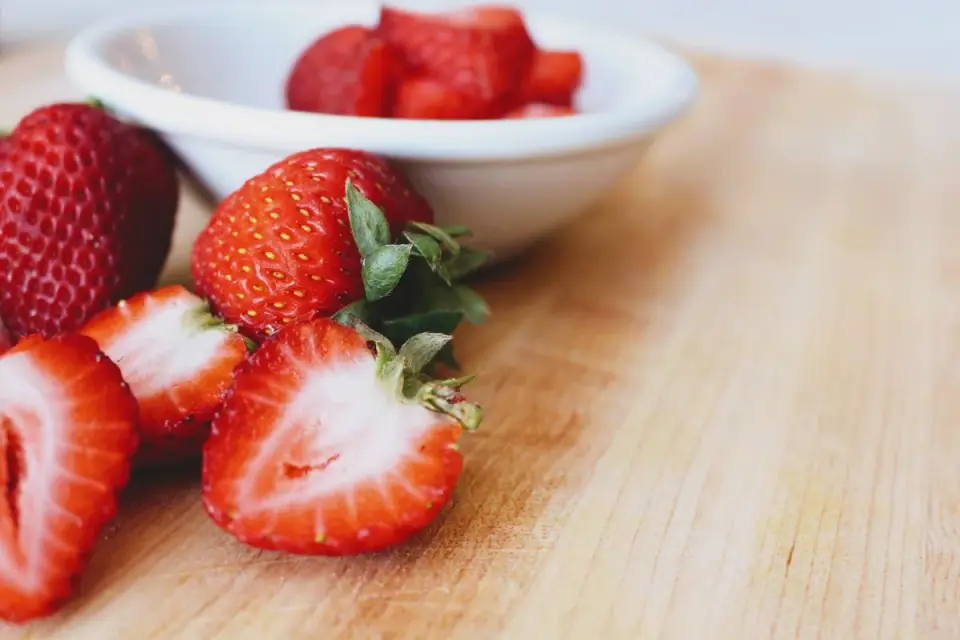
Fisetin is a related flavonoid, found in strawberries and cucumbers, and it has become the more studied single-agent senolytic of the two. The foundational paper, published as PubMed: Fisetin Is a Senotherapeutic That Extends Health and Lifespan, showed that late-life fisetin dosing in mice reduced senescent cell markers across tissues and extended both median and maximum lifespan in that model — a stronger, more direct single-compound result than anything published for quercetin alone. Sheep studies referenced in the Journal of Veterinary Science review used repeated dosing, roughly 100 mg/kg twice weekly for eight weeks, and found reduced senescent cell counts in brain tissue along with downregulation of aging-related genes in peripheral organs.
None of that is a dog trial. It’s the strongest indirect case either compound has, and it’s still one step removed from the species we’re actually treating. Fisetin also shares quercetin’s bioavailability problem: it’s highly fat-soluble and undergoes extensive first-pass metabolism, so a meaningful fraction of an oral dose likely never reaches systemic circulation in an unmodified form. Whether that translates to a clinically useful effect in a 60-pound Labrador’s joints or brain is not something the current literature answers.
A dog I worked with, and why the sequence matters more than the compound
I saw a nine-year-old Border Collie named Scout for a mobility recheck a couple of winters ago, forty-two pounds, still herding the family’s chickens most mornings but slower getting up off the kitchen tile after naps. The owner had already started a quercetin supplement on her own, hoping it would do something about the stiffness. When we talked through what quercetin’s senolytic evidence actually says, and what it doesn’t, she asked the question I get most often in that exam room: should she add fisetin too, or switch. I told her what I tell most owners in that position. Neither compound has cleared a dog-specific trial for joint or cognitive aging, so I wasn’t going to promise a cellular effect I couldn’t defend. What I could defend was watching how Scout actually moved: stairs, the hop onto the couch, gait stiffness after twenty minutes of rest. We used those markers, not a lab value, to judge whether anything she added was doing real work. Three months later, her rise-from-rest time had improved, though I couldn’t separate that from the orthopedic changes we made at the same visit. That’s one dog’s case, not evidence of what the flavonoids did.
Scoring it: strong, thin, and mixed
The evidence for fisetin’s mechanism, senescent-cell clearance and lifespan extension in mouse models, is comparatively strong. The evidence for quercetin’s mechanism, senescent endothelial cell clearance, is also real but leans heavily on its pairing with dasatinib rather than standing alone. What’s thin for both compounds is anything canine-specific: no published randomized trial in dogs has confirmed that an oral fisetin or quercetin supplement reduces senescent cell burden or produces a measurable healthspan benefit in that species. What’s mixed is bioavailability. Both flavonoids are poorly absorbed in standard forms, and while newer delivery formulations claim meaningfully higher absorption, those claims vary by manufacturer and aren’t uniformly independently verified.
For dogs already dealing with joint changes rather than pure cellular aging, it’s worth separating the two questions. If you’re not sure whether what you’re seeing is ordinary aging stiffness or something more mechanical, our guide on arthritis vs. normal aging stiffness in dogs walks through the gait patterns that tell the two apart, and that distinction should come before any supplement decision, senolytic or otherwise.
The sequence I actually recommend
Start with the dog in front of you, not the ingredient panel. If your dog is otherwise healthy and you’re curious about senolytics as part of a broader longevity plan, fisetin currently has the more direct single-compound animal data behind it, so it’s the one I’d discuss first with a vet familiar with your dog’s history. If cost or pill burden is a concern, know that you’re paying for a compound whose canine-specific effect size hasn’t been established, so this is squarely a discretionary, structure/function choice rather than a treatment for a diagnosed condition. Track observable markers over weeks, not days: willingness to jump, stairs, stiffness after rest, sleep quality. And read the two flavonoids against each other rather than in isolation; our comparison of resveratrol versus quercetin for dog longevity support covers how quercetin scores against a different longevity ingredient, which is useful context if you’re building a supplement stack rather than picking one compound.
Buy from a source you can verify, regardless of which flavonoid you choose. Purity testing matters more for a compound with thin canine dosing data than for one that’s been extensively vetted in the species. If you’re deciding between a marketplace listing and a brand’s own site, our piece on Amazon Marketplace vs. brand-direct websites for dog supplements walks through why that choice affects what you can actually confirm about the product in your hand.
Where this leaves the verdict
I don’t think either flavonoid is ready to be called proven in dogs, and I’d rather say that plainly than oversell a chew. Fisetin has the stronger single-compound case from lifespan studies in other species. Quercetin’s best evidence comes from its partnership with a drug most owners aren’t giving alongside it. Judge either one by how your own dog moves and recovers, and keep expectations tied to structure and comfort, not a promised number of extra years.
Frequently asked questions
Is fisetin or quercetin better proven for aging dogs?
Neither has a published dog-specific clinical trial confirming a senolytic effect. Fisetin has the stronger single-compound lifespan data in mouse models; quercetin's best evidence comes from pairing it with dasatinib rather than using it alone.
Can I just add both fisetin and quercetin to my dog's routine?
Talk with your vet first, especially if your dog takes other medications. Since canine dosing and interaction data are thin for both compounds, that conversation should weigh your dog's specific health history before you combine anything.
Sources
- Anti-Aging Strategies for Dogs: Current Insights and Future Directions — Journal of Veterinary Science
- Fisetin Is a Senotherapeutic That Extends Health and Lifespan — PubMed
- Senolytics Decrease Senescent Cells in Humans: Preliminary Report from a Clinical Trial of Dasatinib Plus Quercetin in Individuals With Diabetic Kidney Disease — PMC