On this page
- The verdict before the formula
- Why the single-number answer misleads owners
- A morning I remember from clinic
- When more water is the finding, not the fix
- Reading the other end: dehydration signs owners can check at home
- The sequence I actually use
- A case where the pattern held
- Diet, digestion, and water needs together
- The bottom line
The verdict before the formula
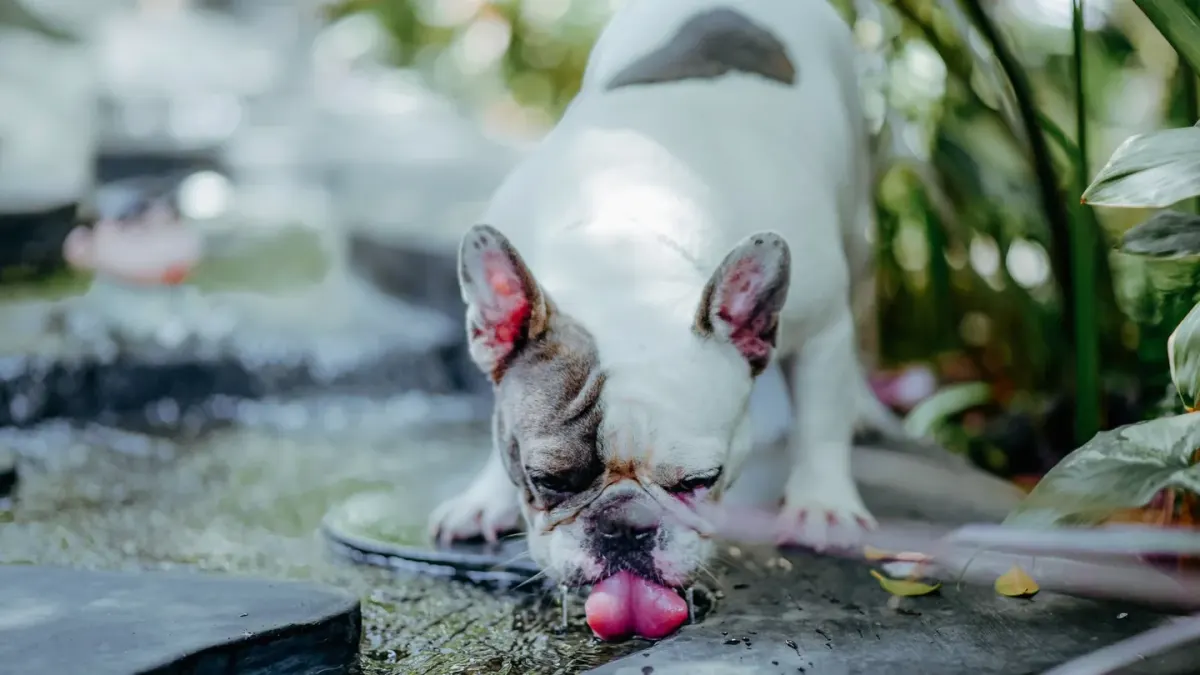
Ask me how much water a dog should drink and I’ll give you the range first, because the range is the useful part: roughly 40 to 60 ml per kilogram of body weight per day for a healthy adult eating a typical diet, adjusted upward for heat, exercise, and dry kibble, and downward for canned or fresh food that’s already 70-80% moisture. For a 20 kg (44 lb) dog, that lands somewhere between 800 ml and 1.2 liters — call it three to five cups — under ordinary conditions. That range is a screening tool, not a target to hit with a measuring cup, and I say that as someone who reaches for both an MRI and an acupuncture needle depending on what a patient’s body is telling me. The number on the bowl matters less than the trend.
Why the single-number answer misleads owners
I’ve watched owners fixate on a target ounce count the way they’d track a supplement dose, and the physiology doesn’t cooperate with that kind of precision. Total water turnover in a dog comes from three sources: drinking, water bound in food, and metabolic water generated as the body oxidizes fat, protein, and carbohydrate. A dog on a wet or fresh diet may drink visibly less from the bowl and still be fully hydrated, because a third to half of daily intake is already arriving through the food. A dog switched cold to dry kibble often drinks noticeably more in the same week, and that’s not thirst gone wrong — it’s the diet’s moisture content shifting, and the kidneys doing exactly what they’re supposed to do to maintain plasma osmolality within a tight range.
Environmental heat and activity change the equation further. Panting is a dog’s primary heat-dissipation mechanism, and evaporative water loss through the respiratory tract during panting or sustained exercise can meaningfully outpace what a formula predicts. A dog that free-feeds water and self-regulates on a cool, sedentary day may look “under target” against the 40-60 ml/kg range and be perfectly fine. The formula is a floor for suspicion, not a ceiling for normal.
A morning I remember from clinic
A twelve-year-old spayed female Cavalier King Charles Spaniel, about 8 kg, came in because her owner noticed she’d started finishing her water bowl twice before noon instead of once by evening — a change she’d tracked for about ten days after her husband commented on refilling it more often. Nothing else had changed on the surface: same appetite, same walks around the block at 7 a.m., coat still glossy. But the owner had also noticed the dog pacing to the water bowl at 2 a.m., which was new. On exam, her gums were tacky rather than dry-tacky, skin tent released in about two seconds, and her weight was stable against the prior visit. That combination — normal hydration on exam but a genuine behavioral increase in drinking — is exactly the pattern that sends me to bloodwork and a urinalysis rather than reassurance, because early endocrine and renal changes can look completely unremarkable on physical exam while the urine concentrating ability has already started to slip.
When more water is the finding, not the fix
Water intake climbing well past the normal range — a pattern called polydipsia — is one of the more reliable early signals in veterinary medicine precisely because it’s easy for an owner to notice and hard for a dog to hide. According to AKC, dogs normally take in about 20 to 40 milliliters per pound of body weight per day, and intake meaningfully above that under normal conditions is considered polydipsia worth investigating. The differential list for a genuinely polydipsic dog is long — chronic kidney disease, diabetes mellitus, Cushing’s disease, liver disease, pyometra in an intact female, certain electrolyte disturbances — and the reason I don’t treat “just drinking more” as a wait-and-see finding in a middle-aged or senior dog is that several of these conditions are far easier to manage when caught on bloodwork before clinical signs stack up. This is where I lean on Western diagnostics without apology: a urinalysis with specific gravity and a basic chemistry panel will usually tell you more in one visit than weeks of monitoring the water bowl.
Reading the other end: dehydration signs owners can check at home
The mirror-image concern — is my dog drinking enough — has its own physical exam findings, and two are worth knowing before you need them. Skin turgor, or the “tent test,” involves gently lifting the skin over the shoulders and watching how quickly it returns to place; in a well-hydrated dog it snaps back almost immediately, while a dog with even mild dehydration will show a delayed return. Capillary refill time works similarly at the gumline: press a fingertip against the gum until it blanches, release, and count the seconds until pink returns. A study evaluating these methods, published in the American Journal of Veterinary Research, examined skin turgor and capillary refill time specifically as predictors of dehydration in exercising dogs — useful context for anyone assessing a dog after a hot hike rather than in a clinic setting. Neither test replaces bloodwork for a sick dog, but both are fast, free, and genuinely informative for a dog that’s been out in heat, vomiting, or refusing water.
The sequence I actually use
When an owner asks what to do with this information, I give them a short sequence rather than a single rule. First, know your dog’s baseline — not a formula number, but what a normal week of bowl refills actually looks like for your specific dog on your specific food, the same way you’d track normal stool or normal energy. Second, treat sustained change in either direction, sudden drinking more or drinking less for three or more days, as the signal that warrants a call to your vet rather than the color of the water itself. Third, do the tent test and gum check at home when you’re unsure, particularly after exercise, heat exposure, or a bout of vomiting or diarrhea, since dehydration from fluid loss compounds quickly in small dogs and seniors. And fourth, remember that diet moisture content is a legitimate variable, not a red herring — a dog eating canned or fresh food that drinks less than a same-size dog on kibble is not automatically under-hydrated, per the National Center for Biotechnology Information’s NCBI Bookshelf: clinical overview of canine dehydration evaluation, which frames total fluid balance as the relevant endpoint rather than bowl volume alone.
A case where the pattern held
I think often of a nine-year-old male Labrador retriever, roughly 32 kg, whose owners run a small orchard and are used to him drinking heavily after long days outside — so the increase they were seeing didn’t initially register as unusual. What tipped them off was more specific: he’d started asking to go outside overnight to urinate, something he hadn’t done in years, and his appetite had ticked up rather than down. Bloodwork showed changes consistent with early diabetes mellitus. What stays with me isn’t the diagnosis itself but how ordinary the early picture looked — a working dog drinking more in what seemed like a plausible context, easy to explain away by heat and exercise alone. It’s a pattern I now ask about directly with active, outdoor dogs specifically because the “he’s just been busy” explanation is so reasonable that it delays the bloodwork. One case doesn’t prove a rule, but it’s exactly the kind of scenario the formula and the exam findings together are meant to catch before it becomes an emergency.
Diet, digestion, and water needs together
Water intake doesn’t sit in isolation from what’s happening in the gut, and a dog transitioning onto a higher-fiber diet or a fiber supplement needs the water math accounted for, not ignored. Pumpkin fiber is a gentle, natural source of both soluble and insoluble fiber, and fiber of either type binds water in the intestinal lumen — which is part of why a diet change toward more fiber should come with attention to whether the dog is drinking enough to keep stool from becoming too firm rather than too loose. This is also where digestive support and hydration intersect for dogs recovering from GI upset: a balanced gut microbiome supports overall immune function, and dogs working through diarrhea or vomiting lose free water quickly through the same tract that a probiotic or enzyme protocol is trying to rebalance, which is one reason I ask about water intake in the same breath as I ask about stool consistency. If you’re weighing whether a fallen apple or a slice of banana belongs in a senior dog’s routine, the same fiber-and-fluid logic applies — see our guides on what happens when a dog eats apples and how bananas fit into a dog’s diet for the specifics on portion and fiber load. For dogs with more sensitive stomachs, our breakdown of store-bought versus wild mushroom risk covers a related category of “how much is actually fine” questions owners bring to me at the same visits.
The bottom line
There is no single correct number of milliliters a dog should drink today, and I’d be doing owners a disservice to pretend otherwise. What’s useful clinically is the range — about 40 to 60 ml/kg/day as a baseline, adjusted for diet moisture, heat, and activity — paired with two simple physical checks, skin tenting and capillary refill, and a willingness to treat a sustained change in either direction as worth a phone call rather than a shrug. That’s the same instinct that sends me toward imaging for a dog with a subtle gait change or toward an herbal formula alongside a Western workup for a chronic case: the individual trend, tracked carefully, tells you more than any population average ever will. If your dog’s water habits have shifted for more than a few days, or if a fiber change like the one described in our guide on apples and dog digestion has you rethinking hydration alongside diet, that’s the moment to call your vet rather than wait for a clearer sign.
Frequently asked questions
How much water should a puppy drink compared to an adult dog?
Puppies generally track the same 40-60 ml/kg/day range as adults relative to body weight, but their smaller reserves mean dehydration from vomiting, diarrhea, or heat develops faster, so changes in a puppy's drinking or hydration status deserve quicker attention.
Is it normal for a dog to drink more water in hot weather?
Yes. Heat and exercise increase evaporative water loss through panting, and a temporary rise in drinking during hot weather or after activity is expected. Sustained increases over several days regardless of temperature are the pattern worth discussing with a vet.
Can a dog drink too much water?
Excessive water intake, especially gulped quickly, is rarely dangerous on its own in a healthy dog, but sustained heavy drinking (polydipsia) is more often a sign of an underlying issue like kidney disease or diabetes than a problem caused by the water itself.
Sources
- Why Is My Dog Drinking So Much Water? Polydipsia or Excessive Thirst in Dogs — AKC
- Evaluation of skin turgor and capillary refill time as predictors of dehydration in exercising dogs — American Journal of Veterinary Research
- EMS Canine Evaluation and Treatment of Dehydration — NCBI Bookshelf