On this page
Don’t chase a cleaner bowl at every meal — chase a steadier pattern across the week. That’s the myth correction most owners of older dogs don’t hear early enough, and it changes how you read every skipped breakfast.
Appetite in an aging dog isn’t stubbornness. Smell fades, teeth ache, nausea builds quietly, and the nervous system that once drove a young dog to the bowl doesn’t signal hunger as sharply. In neurology we look at the scan and then we check how the whole animal moves through the day, and feeding an older dog asks for that same dual view — what the labs and mouth exam show, plus how warmth, routine, and food texture support the desire to eat.
The limit no topper can fix
Here’s the surprising limit: you can’t coax your way past pain or disease with flavor alone. A new topper may work for two dinners, then fail on the third, because the driver wasn’t boredom.
Vets often see this cycle in senior dogs who eat enthusiastically away from home but pick at home, or who start a meal and walk away. Dental pain, kidney-related nausea, constipation, cognitive change, and drug effects all blunt intake before hunger ever gets a voice. That’s why VCA Hospitals lists medical causes of reduced appetite as the first branch point, not the last resort.
Regina in Miami noticed it with Fernando, her 9-year-old neutered Bernedoodle. He’d eat half his dinner, circle, then lie down by the door. The change that mattered wasn’t a new protein. It was a vet visit that found a cracked upper premolar, plus a switch to two smaller meals 8 hours apart instead of one large evening bowl.
If intake has dropped for more than 48 hours, if weight is slipping, or if there’s vomiting, diarrhea, drooling, bad breath, or extra drinking, don’t run a longer food trial. Book the exam.
Myth: he knows what he needs
The durable myth is that a dog will eat when he’s hungry enough. Older dogs often don’t.
Thirst and hunger signaling get less reliable with age, and learned food aversion builds fast after even one bout of nausea. A dog who vomited after chicken at 7 p.m. may refuse chicken for days. That isn’t pickiness. That’s protective learning wired through the gut-brain axis.
The Merck Veterinary Manual frames anorexia the same way clinicians do, as a sign tied to systemic, oral, or gastrointestinal mechanisms rather than a behavior problem to outwait.
So stop testing willpower. Start lowering the cost of eating.

A steady sequence that respects an older nose and gut
Forget the scatter of tricks. Use one order for two weeks so you can tell what’s actually helping.
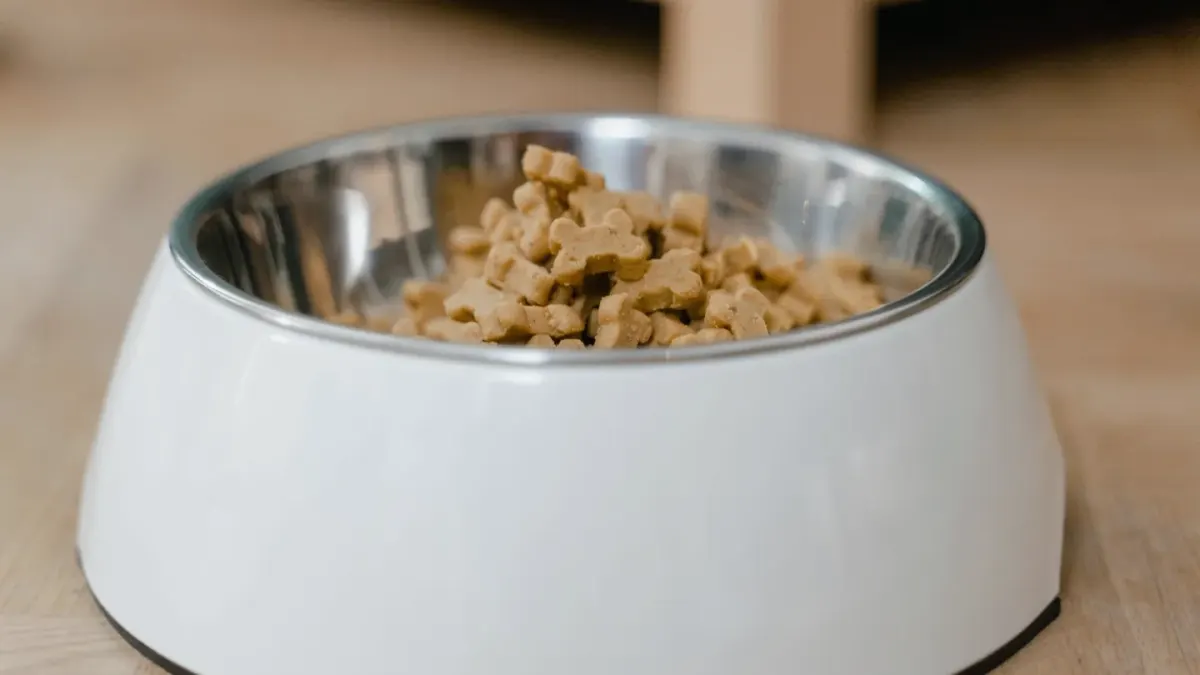
Keep meals quiet, warm, and brief. Offer food in the same place at the same times, warm it to just below body temperature to release aroma, and pick the bowl up after 20 minutes without comment. Most seniors do better on two or three small meals than one large one, and a low-sided, non-slip bowl helps dogs with neck stiffness or missing teeth.
Make chewing easy before you make food richer. Soften kibble with warm water for 10 minutes, try a pate or minced texture over large chunks, and feed on a mat if the tags clink. If you add a topper, keep it to about a tablespoon — warm water from poached plain chicken, a spoon of pumpkin puree, or a little low-sodium broth — and keep the base diet constant for at least five days.
This is where plain food knowledge helps. Many owners ask about sweet additions for smell, and texture matters more than sweetness. For ideas on safe preparation, see Can Dogs Eat Apples? The Verdict, the Myths, and How to Serve Them at Every Life Stage and Can Dogs Eat Bananas?. Keep portions small and skip anything with onion or xylitol, and review Are Onions Toxic to Dogs? Yes — Here’s the Mechanism and the Line I Won’t Cross if you cook with table scraps.
Track intake, water, and stool like vital signs. Older dogs dehydrate faster when they eat less, since canned and soaked foods carry much of their water. A simple log of cups offered versus cups eaten, plus water refills, will tell your vet more than any story about pickiness. For that side of the bowl, Keeping a Senior Dog Hydrated: The Verdict on What Actually Works lays out a practical check.
Don’t lean on fiber powders or enzyme blends to create appetite. A balanced gut microbiome supports overall immune function, and pumpkin fiber is a gentle, natural source of both soluble and insoluble fiber, but neither replaces diagnosis when eating stays inconsistent.
When consistency returns
You’ll know the plan is working when day-to-day intake varies less, not when one meal is perfect.
I favor routine plus medical clearance over rotating proteins every week. That’s the evidence-bounded call: smell, comfort, timing, and health explain most senior appetite loss, and novelty explains very little. What would change my mind is a controlled feeding trial showing sustained intake gains from rotation alone in medically cleared seniors. I haven’t seen it, which is why I don’t lead with it.
Give this sequence ten to fourteen days. Same food, same times, softer texture, warm serving, short window, written log.
Brief recap: rule out pain and nausea first, then make eating easy and predictable.
Frequently asked questions
How long can a senior dog skip meals before I call the vet?
Call after 48 hours of clearly reduced eating, sooner with vomiting, diarrhea, lethargy, weight loss, or extra thirst. Seniors have less reserve, so don't wait a week to see if appetite returns.
Should I keep switching foods until he shows interest?
No. Hold one complete senior diet steady for 5 to 7 days while you adjust warmth, texture, meal timing, and bowl comfort. Constant switching hides patterns your vet needs to see.
Do warming and smaller meals really help?
They often do because they target mechanism — aroma drives interest and smaller, softer meals reduce chewing effort and post-meal nausea. Track offered versus eaten for two weeks to judge.
Sources
- Anorexia in Dogs — VCA Hospitals
- Disorders of the Stomach and Intestines in Dogs — Merck Veterinary Manual