On this page
A 12-year-old spayed Beagle mix started lagging twenty minutes into her evening loop, and her owner assumed she needed a longer walk to loosen up. What she actually needed was a different surface to warm up on. For two weeks they swapped the first half-mile of cracked sidewalk for a flat park path of packed dirt and short grass, kept the same pace and the same harness, and tracked morning stiffness. By day 10 she was rising from her bed in under a minute instead of three, and she stopped sitting down at the second curb. The distance had not changed. The ground had.
That is my verdict for almost every stiff senior: pick for traction, evenness, and give, in that order, and run that plan alongside conventional care plus hands-on support like acupuncture, Tui-na, or animal chiropractic where your team offers it. Surface choice may help support comfort and mobility, never fixes arthritis, and no path replaces diagnosis and pain control.
The ground does more work than we credit
Hard, slick, or tilted ground forces small compensations with every step. A senior dog with worn cartilage and weaker hind-end muscles cannot absorb that concussion or correct that slip as quickly, so the walk that should maintain muscle ends up feeding soreness that night.
VCA Hospitals notes that arthritis in dogs shows up as stiffness, lagging, reluctance to climb, and lameness, and recommends low-impact exercise and attention to footing as part of daily management. That matches what I see in practice: dogs that move daily on forgiving, grippy ground keep stride length longer than dogs walked the same minutes on cambered concrete.
I still want conventional care in the loop — weight control, a full orthopedic exam, and pain scoring under the AAHA Pain Management Guidelines — with manual-medicine counsel added, not substituted. Acupuncture may help support relaxation around guarded hips, Tui-na bodywork may help support awareness of hind-limb placement, and a chiropractic assessment may help support recognition of a locked lumbosacral junction that makes every curb feel taller.
Soft is not always kind: myth versus what feet feel
The myth is that the softest surface is automatically joint-friendly. Deep sand, thick mulch, and spongy pea gravel look gentle and then demand far more muscular effort, twist toes, and let a tired senior sink at the shoulder.
Think in three qualities instead. Traction means nails and pads grip without splaying. Evenness means no sudden camber, root, or pothole that loads one carpus. Give means the top layer deforms just enough to blunt impact and then springs back.
My working order for most older dogs: well-kept grass over level soil, packed crusher fines or cinder track, rubberized track or interlocking mats for short drills, then dry asphalt in cool hours, with concrete, cobble, deep sand, and ice at the bottom. Well-worn grass wins because it offers all three at once, while concrete offers traction but almost no give.
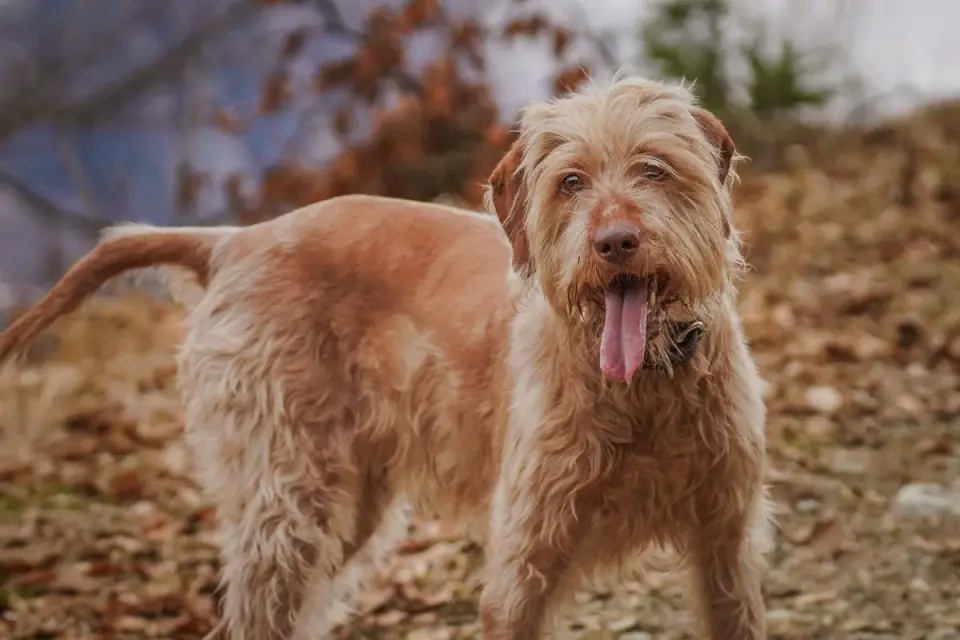
An 8-year-old 74-pound Labrador taught me the tradeoff the hard way. His owner, worried about pavement pounding, moved all four daily walks onto a deep beach-sand stretch near their house. For the first three outings he seemed happy, then on night four he refused the three porch steps and stood panting, with both forelimbs stiff and his hind feet knuckling on turns. We had traded impact for workload. We cut sand to one short session per week, moved three walks back to damp morning grass around the soccer field for 0.4 miles each, added a five-minute warm-up at a shuffle before any trot, and his evening restlessness settled within a week.
That failure still guides my scoring. If a dog comes home more tired than loose, the surface was too demanding, not too hard.
How to score any route before you commit
Walk it without the dog first. Look down, not ahead. I grade a half-block sample on five checks and I reject the route if it fails two.
First, footing: can you press a thumb into the top and leave a shallow print that rebounds. Second, slide: does your rubber sole twist without catching on wet leaves, moss, or polished stone. Third, tilt: does water pool to one side, which tells you the dog will lean to one side. Fourth, joints and edges: are expansion gaps, tree lifts, or curbs higher than the dog’s carpus. Fifth, exits: can you shorten the loop in under two minutes if the dog fades.
Grass needs mowing and drainage, not just greenness. A soaked field with hidden holes is worse than clean, shaded asphalt at 7 a.m. Track surfaces need a hose test — dusty crusher fines turn slick when first wet. For indoor work, interlocking foam over a non-slip rug beats bare hardwood every time, and runners through hallways where the dog turns may help support steadier rising.
For dogs that also scan, bark, or freeze at triggers, pair this footing plan with ideas from calm walking routes and management for a reactive dog so the nervous system is not bracing while the joints are working.
The sequence I would try this week
Keep it simple and repeatable.
Start with two short walks per day on your best-traction option, five to fifteen minutes depending on the dog, with a slow first three minutes. Add one gentle grade only if the dog finishes loose and sleeps normally. Keep pavement for cool, direct connections, not for conditioning miles. Save sand, deep mulch, and long hills for later, if ever.
A 10-year-old 22-pound terrier mix from a third-floor walk-up shows where the usual advice has to bend. Grass was a 14-day wait after a field reseeding closed the only park, and the elevator was out for six days, so stairs and concrete were unavoidable. We did what the textbook would not: three six-minute leash walks on the parking garage’s level, shaded asphalt at dawn, with a towel runner across the lobby tile, a belly sling on the six front steps twice daily, and hind-leg circles from her Tui-na homework before leaving. She kept her appetite and her morning latency stayed under two minutes. When the grass reopened, we shifted back.
Supplements sit beside this work, not above it. If you are already using joint nutrition, my context piece on dog hip and joint supplements explains what those tools may help support and where expectations should stay modest.
One short line to carry home: traction keeps the dog upright, evenness keeps loading fair, and a little give keeps the walk worth repeating.
Frequently asked questions
What is the best walking surface for an older dog with arthritis?
Level, grippy grass over firm soil or a packed track is best for most seniors because it combines traction, evenness, and slight give. Keep walks short with a slow warm-up and adjust with your veterinarian if stiffness lasts more than an hour afterward.
Is concrete bad for older dogs to walk on?
Not always, but it has almost no shock absorption and can be slick when wet or hot in sun. Use clean, level concrete or asphalt for short connections in cool hours, and do most minutes on grass, dirt path, or track.
Should a stiff senior dog walk on sand?
Usually no for daily walks. Deep sand increases muscular effort and can worsen soreness that night. Save it for very short, supervised sessions only if your veterinary team agrees.
Sources
- Arthritis in Dogs — VCA Hospitals
- 2022 AAHA Pain Management Guidelines for Dogs and Cats — AAHA