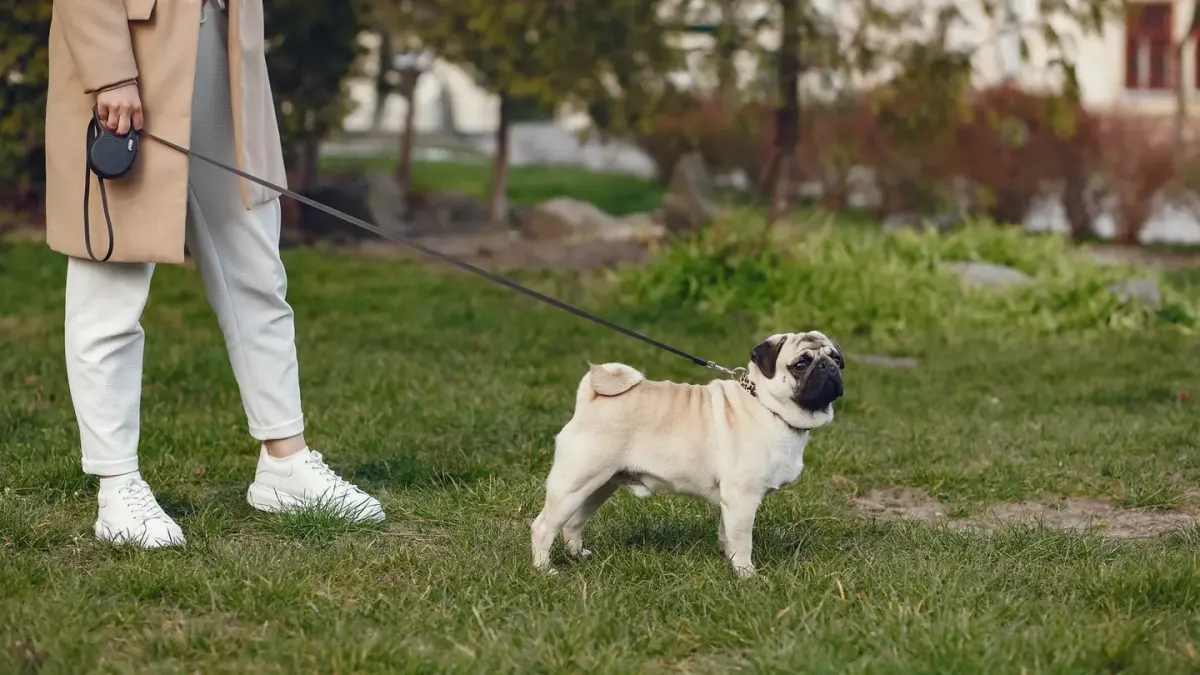
Stiffness has a mechanical pattern, while normal aging tends to look like lower output with preserved movement quality. That distinction matters because treatment pathways diverge early, and supplements framed as adjunctive support cannot correct a structural problem.
Why age alone explains less than owners expect
Healthy aging reduces aerobic capacity, muscle mass, and recovery speed. The dog still moves through a full range of motion, still chooses stairs or a jump with normal form, then tires sooner. Joint disease changes how the joint glides and loads. Cartilage thins, joint fluid thins, periarticular fibrosis develops, and nociceptors in capsule and subchondral bone fire under load.
The Merck Veterinary Manual describes osteoarthritis in small animals as progressive cartilage loss with synovitis and remodeling, not uniform wear from birthdays. Vets often see owners attribute a shortened stride or bunny-hopping hind limbs to age for months before radiographs show osteophytes or joint effusion.
My position is direct: judge the joint mechanically first, and treat age as the diagnosis of exclusion. I would change that view if controlled data showed age-matched dogs without joint pathology develop identical warm-up lameness, prolonged recumbency stiffness, and asymmetric loading. That evidence does not exist.
Mechanical signs that point toward joint stiffness
Normal slowing is symmetric and predictable. The dog walks a little slower, sleeps a little more, and still rises in one fluid motion. Stiffness is asymmetric and time-dependent.
Watch for warm-up behavior. Stiffness peaks after rest — first steps in the morning, first steps after a nap — then eases within 5 to 20 minutes of gentle walking. Normal slowing does not warm out of itself because there is no restriction to warm out of.
Watch load transfer. Dogs with forelimb shoulder or elbow restriction shorten the cranial phase of stride. Dogs with hip or stifle disease shift weight forward, sit with a leg kicked out to the side, or climb stairs with both hind limbs pushing together. Muscle atrophy over one thigh or shoulder points toward chronic unloading of that limb.
Watch consent to manipulate. A stiff dog resists full extension or flexion, vocalizes, licks lips, or moves away during range-of-motion testing. An older but comfortable dog accepts manipulation and simply lacks stamina on distance.
Pain changes the read. The AAHA pain guidelines emphasize behavioral assessment — altered posture, reduced grooming or play, restlessness at night, and reluctance to jump — alongside palpation. A single sign proves little. A cluster across rest, initiation, and sustained activity points toward pain-driven stiffness.
Casey noticed exactly that pattern in Skeeter, a 6-year-old spayed female Siberian Husky in North Charleston, South Carolina. Skeeter still wanted her evening loop but needed three attempts to rise from tile, dragged the first 50 yards, then moved almost normally by the quarter-mile mark. That rest-to-motion transition is mechanical information, not attitude.
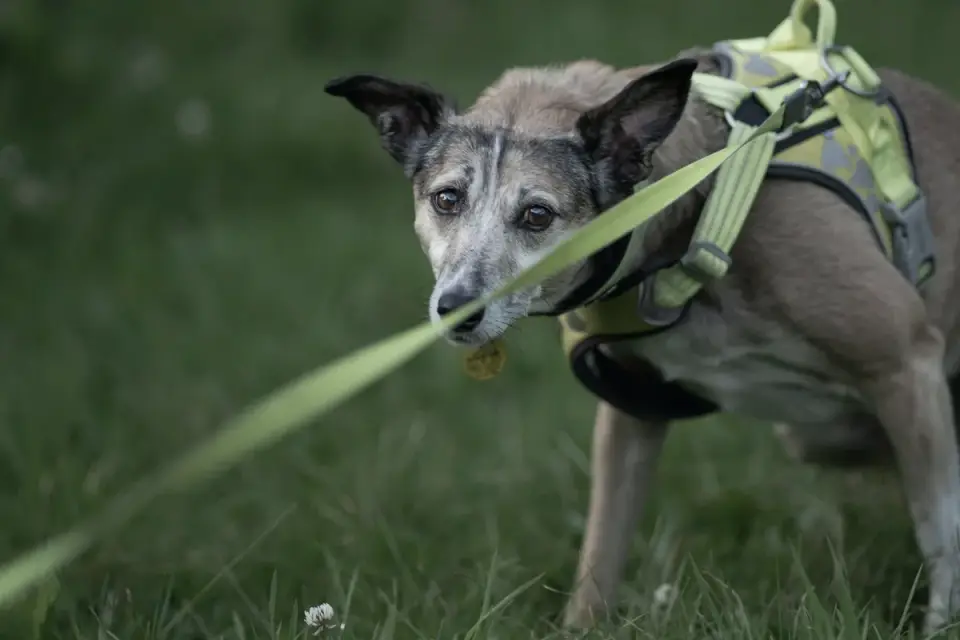
A 2-week home check that sorts slowing from stiffness
Do not rely on memory at the appointment. Record function under identical conditions.
Track rising, starting, sustaining, and recovering for 14 days. Time how long morning stiffness lasts. Count stairs climbed without stopping. Note distance before lagging, surface differences, weather effects, bad days versus good days, and any non-weight-bearing lameness. Video the same 30-foot walk on day 1, 7, and 14 from the side and behind.
Normal slowing holds steady across the log. Stiffness fluctuates with rest duration, cold or damp conditions, and prior-day load, and it leaves a signature: worse starts, better middles, sore evenings.
Bring that log when hind-limb hesitation overlaps with other differentials. For context on arthritis-specific signs, compare notes with Arthritis vs. Normal Aging Stiffness in Dogs: How to Tell the Difference and Dog Hip and Joint Supplements: What Actually Helps a Stiff, Aging Dog Move Better. If stairs are the failure point, Glucosamine for a Dog Struggling with Stairs at Night explains what that ingredient can and cannot support.
Seek examination promptly for non-weight-bearing lameness, overnight swelling, vocalizing on handling, or loss of overnight function.
Joint supplements remain adjunctive support for mobility, alongside weight control, low-impact conditioning, traction, and prescribed analgesia or surgical management when indicated. Glucosamine and chondroitin are among the most studied joint support ingredients for dogs, but study quality is mixed and no chew restores lost cartilage.
The call stays mechanical.
Frequently asked questions
How long should morning stiffness last before I call the vet?
Time it for several mornings. Stiffness that regularly lasts beyond 15 to 20 minutes, worsens week to week, or includes limping or vocalizing warrants an exam rather than continued monitoring.
Can an older dog have both normal slowing and joint stiffness?
Yes. Many senior dogs lose stamina and develop joint disease together. The log helps separate them: shorter distance points toward conditioning and age, while hard starts, asymmetric stride, and reluctance to extend a joint point toward stiffness.
Will rest alone fix stiffness?
Brief rest after overexertion helps soreness, but prolonged rest worsens arthritic stiffness and muscle loss. Short, frequent leash walks, traction on slick floors, and healthy weight usually maintain mobility better than crate rest unless your vet prescribes it.