On this page
The Labrador in exam room two was eight months old, sixty-two pounds, and growling every time his owner reached for his collar. She’d read online that growling meant he was “turning aggressive,” and she’d started avoiding his collar entirely. When I actually watched the two of them together ten minutes later, in the waiting room, he was doing the exact same low growl while tug-of-warring with her hoodie sleeve — tail up, hips loose, mouth open in a soft pant-smile. Same sound. Completely different dog.
That’s the part owners miss most: the growl itself tells you almost nothing. The body around it tells you everything.
The growl is not the message — the body is
I tell owners this in almost every consult where growling comes up: stop listening to the growl and start watching the dog. A growl is just a vocalization, and dogs use the same vocal cords for wildly different emotional states. Pitch and volume shift a little between play and warning, but not reliably enough to diagnose from sound alone, especially over video or a phone call. What’s reliable is the posture, the face, and the pattern of movement around the sound.
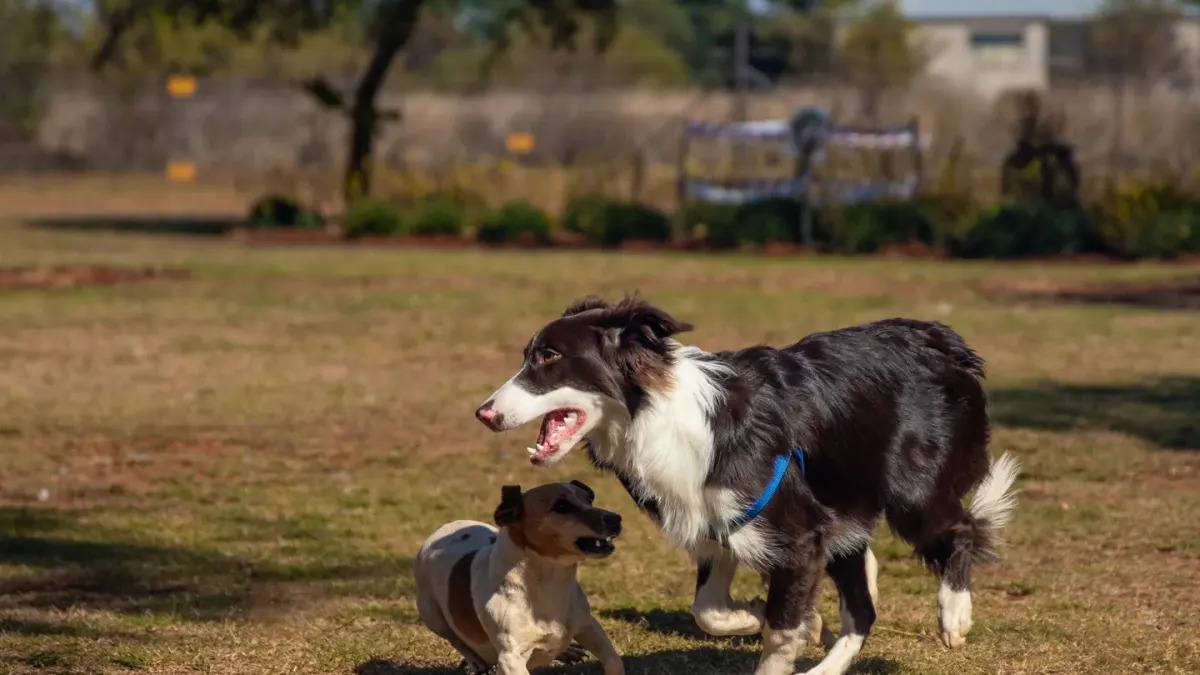
A dog who’s playing tends to have a loose, bouncy body — what trainers sometimes call a “play bow,” front end down, rear end up, tail wagging in broad sweeps. The mouth is open and relaxed, sometimes in that exaggerated open-pant look. Play growling is usually punctuated: growl, pause, approach again, growl, retreat, repeat. It’s a rhythm, not a steady state.
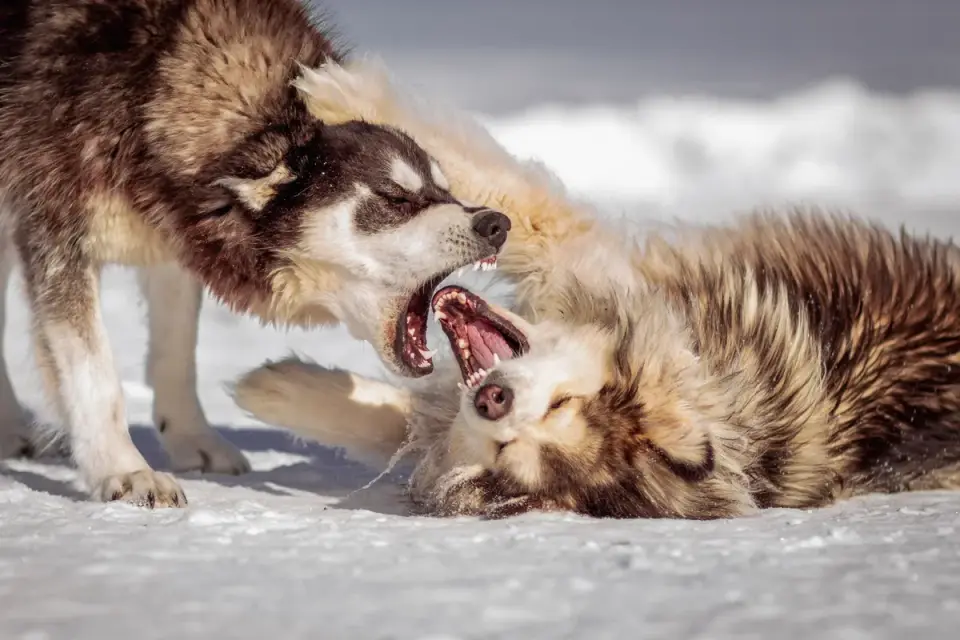
A warning growl looks different from the first second. The body stiffens rather than loosens. Weight shifts backward onto the haunches, or the dog freezes entirely. Tail carriage goes high and rigid, or tucks low — either way it stops moving in that loose wag. Lips may lift to show teeth, ears pin back or forward and rigid, and the dog holds still instead of bouncing away and back. If you took a single still photo of a warning growl, you’d see tension in every joint.
The myth: “a growling dog is a dangerous dog”
This is the myth I spend the most time correcting, because it drives owners toward two bad outcomes. Some punish every growl, which teaches a dog to skip the warning and go straight to a bite next time — the growl was doing its job, and suppressing it removes the dog’s safest way of saying “back off.” Others assume every growl during rough play is a real threat and break up perfectly normal wrestling, which can actually frustrate a dog and, over repeated interruptions, make some dogs more reactive around play itself.
Growling is communication, full stop. The job isn’t to eliminate it — it’s to read it accurately and respond to what it’s actually telling you.
Reading the reality: the checklist I actually use
When an owner asks me “was that play or a warning,” I walk through the same short list:
- Body tension. Loose and wiggly leans play; stiff and frozen leans warning.
- Face. Open, relaxed mouth versus a hard stare, lip lift, or whale eye (whites showing).
- Movement pattern. Approach-retreat cycling suggests play; holding ground or backing into a corner suggests a warning.
- Context. Is this two familiar dogs mid-wrestle, or a dog cornered near food, a resting space, or a new person? Context often settles it faster than any single body signal.
- What happens next. Play growling is usually followed by more play — a bow, a chase, a return. A warning growl is followed by stillness or escalation if the trigger doesn’t back off.
None of these signals is decisive alone. Together, in sequence, they’re usually clear.
I had a case a few years back — a rescued Cattle Dog mix, roughly four years old, about 38 pounds, who growled almost constantly during any tug game with her new owner’s teenage son. The son assumed the dog “hated” him. When I watched a video the family sent, the pattern was obvious within seconds: loose hips, tail sweeping, repeated re-grips on the toy, and a play bow every time she dropped it. That was a dog who wanted the game to continue, not one who wanted it to stop. What actually changed the household’s read on her wasn’t a training tool — it was slowing the video down and pointing at her tail, her hips, her mouth, frame by frame, until the son could see it himself.
Where nutrition and calming support genuinely fit — and where they don’t
Owners sometimes ask if a calming chew or supplement will “fix” a dog that growls a lot. It’s worth separating two very different situations. If a dog is growling defensively because they’re generally anxious, easily startled, or overstimulated by normal household activity, structure/function calming ingredients may have a supporting role alongside training and management — not as a replacement for reading the dog correctly.
A few ingredients have real evidence behind them for general stress support in this space. A systematic review in Cureus concluded that KSM-66 ashwagandha has a moderate positive impact on stress reduction and cognitive performance, based on multiple randomized controlled trials. L-theanine, an amino acid found in tea, has also been studied for calming effects — though the evidence base is mostly human research; a review in Molecular Psychiatry notes benefit in a study on psychotic anxiety at 400 mg/day over 8 weeks, which doesn’t directly translate to a dosing recommendation for dogs. Chamomile has a longer history of traditional use for relaxation, but a review in Biomedicines is candid that for most species, the evidence is still preclinical or rooted in traditional use rather than controlled trials.
None of that evidence tells you whether a specific growl was play or a warning. Supplements support a dog’s baseline stress tolerance over time — they don’t substitute for reading body language in the moment, and they’re not a fix for resource guarding, fear-based aggression, or pain-driven growling, which need a behavior plan or veterinary workup instead.
If the growling coincides with touch specifically, it’s worth reading our guide on why dogs growl when petted, since pain and overstimulation are common, overlooked causes there. And if you’re trying to sort out whether a broader pattern of “acting out” is boredom or something more anxiety-driven, our piece on boredom vs. separation anxiety walks through the same kind of context-first checklist.
The sequence I actually walk owners through
- Pause and watch, don’t react on the sound alone. Give yourself two or three seconds to check body, face, and pattern before intervening.
- If it reads as play, let it continue but keep an eye out for a shift — play can tip into overstimulation, especially between mismatched dogs.
- If it reads as a warning, calmly remove the trigger (space, the resource, the touch) rather than punishing the dog for communicating.
- Log the pattern. Note what preceded the growl and where on the body it happened. Recurring warning growls in the same context — near the food bowl, during nail trims, when a specific person approaches — are worth bringing to your veterinarian or a certified trainer.
- Rule out pain first if a normally tolerant dog suddenly starts warning during handling. A sudden change in growling is one of the more reliable early signs something physical has changed, especially in older dogs — our arthritis vs. normal aging stiffness guide covers how that kind of shift can show up.
In my practice, the dogs who get labeled “aggressive” over what turns out to be ordinary play are almost always dogs whose owners never got shown what to actually look at. I’ve sat with families on the floor of an exam room, replaying the exact same ten seconds of video three or four times, until the loose tail and the play bow finally register as the real story instead of the growl. That reframe changes how people handle their dog for years afterward — not because the dog changed, but because the owner finally had the vocabulary for what they were seeing.
The bottom line
A growl by itself is not a verdict. Watch the body — loose and bouncy reads play, stiff and still reads warning — and use context as your tiebreaker. Punishing every growl teaches a dog to stop warning you before it bites; ignoring every warning growl risks exactly what the growl was trying to prevent. When in doubt, or when warning growls are recurring in a specific situation, that’s the moment to bring in your veterinarian or a certified trainer rather than guessing.
Frequently asked questions
Can a growl be both playful and a warning at the same time?
Yes. Play can tip into overstimulation quickly, especially between mismatched dogs, so a growl that starts loose and bouncy can shift into a stiffer, warning-type growl within seconds. Watch for the body tightening up mid-play and separate the dogs if it does.
Should I ever punish my dog for growling?
No. Growling is a warning signal, and punishing it can teach a dog to skip the growl and escalate straight to a snap or bite next time. Instead, respond to what the growl is telling you — remove the trigger and address the underlying cause.
Is a quiet, low growl always less serious than a loud one?
Not reliably. Volume and pitch shift a little with intensity, but body posture, facial tension, and context are far more accurate indicators than how loud the growl sounds.
Sources
- Ashwagandha for Stress and Cognitive Performance: A Systematic Review — Cureus
- L-Theanine and Anxiety: A Review — Molecular Psychiatry
- Chamomile in Anxiety and Stress: Evidence Across Species — Biomedicines