
On this page
Rhodiola for stress-related low energy in dogs sounds promising, but the canine evidence isn’t there yet.
My call before the details
I would not start with rhodiola when stress seems to drain your dog’s spark. In meridian terms, this looks like Qi stagnation rather than true deficiency — flow gets stuck under tension, and the dog conserves energy instead of spending it. Needle-and-herb reasoning may help support smoother flow, but rhodiola itself has almost no direct canine data for this pattern. You get more trustworthy support from routine, rest, and better-studied calming ingredients while your veterinarian rules out medical causes for flat energy.
A seven-year-old, 48-pound Labrador mix I followed as a composite case shows the decision point well. He had moved to a noisy apartment building and three weeks in his owner noticed shorter evening walks, slower greetings at the door, and long naps between pacing to the window at sirens. Bloodwork at his clinic visit was unremarkable, and the owner was weighing a rhodiola capsule found online against a vet visit for behavior plus a simpler calming plan. That fork — herb first versus pattern first — is where most owners land, and it matters more than the herb label.
The tired-but-wired pattern owners describe
Stress-related low energy rarely looks like sleepiness alone. You may see a dog that is alert to triggers, slow to recover, reluctant to play, and quick to shut down on walks. From a traditional perspective, Liver Qi constraint fits this picture: tension binds the smooth movement of Qi, digestion and sleep turn uneven, and vitality looks low because it is not circulating well.
That framing does not diagnose anything on its own. Low thyroid function, pain, anemia, early cardiac disease, and chronic poor sleep can mimic the same shutdown. My bias is to treat rhodiola as secondary until a veterinarian has cleared those contributors, because no adaptogen compensates for an unaddressed medical driver.
Myth versus reality: adaptogen does not mean proven in dogs
The myth is that because rhodiola helps humans handle stress fatigue, the same effect transfers neatly to dogs. The reality is thinner. For the remaining species, evidence is derived mainly from preclinical studies or traditional use, as the MDPI Biomedicines review notes, “For the remaining species, evidence is derived mainly from preclinical studies or traditional use.” That sentence keeps rhodiola in the traditional-use category for dogs, not the clinically proven category.
The strongest counterargument deserves airtime. Owners reasonably ask why traditional use plus rodent and human data should not be enough for a tired, stressed dog, especially when the herb feels gentler than prescription options. I still land on caution because dogs differ in metabolism, anxiety behavior, and stress physiology, and the canine-specific signal for rhodiola and energy after stress is missing. Pairing needle-and-herb reasoning with realistic may-help-support framing means I can respect tradition without overstating it.
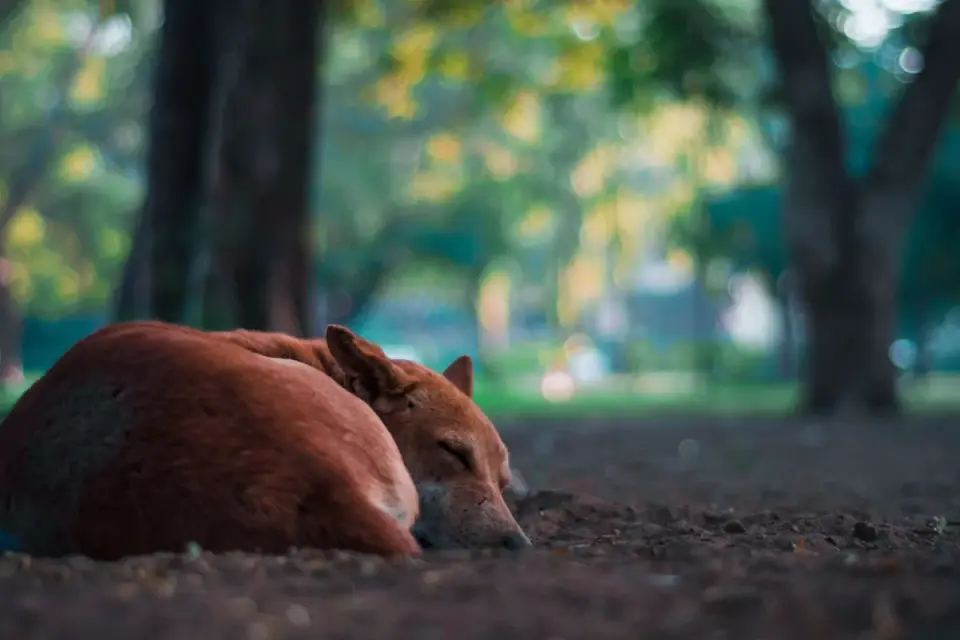
A four-year-old, 22-pound beagle mix shows the tradeoff that complicates the recommendation. Her owner tried a human-labeled rhodiola blend for two weeks after fireworks season, hoping for brighter morning energy, yet by day 10 the dog was still shadowing the owner room to room and skipping her usual sniffy loop. The failed approach was not harmful in this composite scenario, but it cost time while the real levers — predictable departures, white noise, shorter decompression walks, and a vet-approved calming plan — stayed on hold. When the owner pivoted to that sequence, leash pacing eased before playfulness returned.
Where the evidence is strong, thin, or mixed
It helps to score rhodiola beside options with clearer structure/function language.
Rhodiola rosea sits in thin territory for dogs. Traditional systems value it for stamina under strain, which maps loosely to Qi support, yet I find no robust canine trials for stress-related low energy. That is not dismissal. It is a call to keep expectations modest and veterinary oversight central.
Ashwagandha has a broader human evidence base for stress support. A systematic review analyzed multiple RCTs and concluded that ashwagandha has a moderate positive impact on stress reduction and cognitive performance, according to Cureus, “A systematic review analyzed multiple RCTs and concluded that ashwagandha has a moderate positive impact on stress reduction and cognitive performance.” That finding does not prove the same result in dogs, and you can read more in Ashwagandha for Dogs: The Verdict, the Evidence, and How to Use It Well, but it gives you a clearer evidence tier than rhodiola currently offers.
L-theanine is better characterized as a calming amino acid. Molecular Psychiatry discusses the human signal, “except for one study on psychotic anxiety (SMD = 0.54; 400 mg/day for 8 weeks),” at “400 mg/day for 8 weeks” in people. That dose and population do not transfer to dogs, and L-theanine is an amino acid found in tea that has been studied for its calming properties. For context on chew formulas, see Dog Calming Chews: What the Evidence Actually Supports and Dog Anxiety Supplements: What the Evidence Actually Supports.
Chamomile belongs in the mixed-traditional group. Chamomile and Valerian Root have been used in traditional herbal care to support relaxation. That traditional-use framing may help support rest after stress, which sometimes restores daytime energy indirectly, but it is not direct proof for energy itself.
A practical sequence to try instead
Start with pattern and safety, then layer support. Ask your veterinarian to rule out pain, thyroid, cardiac, and sleep-disrupting causes when energy drops alongside anxiety, clinginess, appetite change, or noise sensitivity. Track one observable marker daily, such as minutes of voluntary play or distance walked before slowing.
Keep the stress load legible for two to three weeks. Fixed wake, meal, walk, and bed times support smoother Qi flow in plain owner terms: predictable rhythm, less vigilance. Add decompression sniff walks, a quiet rest zone away from foot traffic, and brief separation practice rather than long flooded absences. If you use a calming supplement, choose one with transparent labeling, third-party quality checks, and ingredients your veterinarian already knows, and introduce one change at a time.
An eleven-year-old, 63-pound senior Shepherd mix illustrates the edge case that changes the plan. By week four of a new grandchild visiting schedule, he napped deeply yet startled easily and lagged on stairs he once managed, which pointed less to everyday stress and more to age-related discomfort plus disrupted rest. In that setting, pushing an energizing adaptogen would have missed the point. Joint evaluation, pain screening, traction rugs, and protected daytime sleep did more for his evening willingness to engage than any stamina herb could have.
So where does that leave rhodiola for your dog — could steadier rest and a simpler, vet-guided calming routine restore energy better than reaching for an unproven adaptogen first?
Frequently asked questions
Can rhodiola give my stressed dog more energy?
There is no solid canine evidence that it does. Rest, predictable routine, medical screening, and better-studied calming support are more defensible first steps, with your veterinarian guiding any herbal trial.
What should I rule out before trying an adaptogen?
Pain, thyroid disease, anemia, cardiac issues, poor sleep, and recent changes in home routine. Low energy plus anxiety warrants a vet visit rather than a supplement-first approach.
What calmer alternative has clearer evidence?
Options such as KSM-66 ashwagandha and L-theanine have more human clinical discussion than rhodiola, though canine data remain limited. Use them only within a vet-approved plan and track one behavior marker.
Sources
- Chamomile evidence review — MDPI Biomedicines
- Ashwagandha stress and cognition systematic review — Cureus
- L-Theanine and anxiety meta-analysis — Molecular Psychiatry