
On this page
Picture a nine-year-old terrier mix who used to sleep through thunderstorms and now paces the hallway at the first rumble. His owner has already tried a lavender spray and a weighted vest, with mixed results, and a friend just mentioned ashwagandha. That’s a reasonable place to land, but it’s also exactly where owners tend to skip a step: they treat the herb as the answer before anyone has asked whether pain, hearing changes, or early cognitive decline are driving the new behavior. My verdict is that ashwagandha deserves a real look for dogs like this one, but only as the second move, after a workup, not the first.
The verdict, stated plainly
Ashwagandha (Withania somnifera) is an adaptogenic root extract with a growing, if still modest, evidence base in dogs specifically. That distinguishes it from several other popular calming ingredients, which still rest mostly on human data or tradition. I’d start with a standardized root extract, introduce it after ruling out a medical cause for the stress signs, and judge it over several weeks rather than expecting an immediate, sedative-like effect. That is a workup-first stance, and it is the one I hold to at the exam table with nearly every calming-supplement conversation.
Myth versus reality: is this just a repackaged human trend?
The myth is that ashwagandha is a wellness-aisle import with no dog-specific backing. The reality has shifted. A randomized, double-blinded, placebo-controlled study published in PMC examined a standardized ashwagandha root extract in healthy geriatric dogs and tracked aging-related changes over time, and a separate randomized controlled trial on ScienceDirect evaluated a standardized root extract specifically for reducing stress and anxiety signs in domestic dogs. Neither trial is large by human-medicine standards, and neither should be read as proof of a cure. But they move ashwagandha out of the category of ingredients whose entire case rests on borrowed human research.
Compare that to chamomile, a fixture of nearly every calming chew. A review in Biomedicines notes that “for the remaining species, evidence is derived mainly from preclinical studies or traditional use” — which is a polite way of saying the dog-specific data still lags the reputation. L-theanine sits somewhere in between: a review in Molecular Psychiatry found calming effects in most human anxiety studies, “except for one study on psychotic anxiety (SMD = 0.54; 400 mg/day for 8 weeks),” which is useful context but is human dosing data, not canine. Ashwagandha’s human literature is also encouraging on its own terms — a systematic review in Cureus concluded that ashwagandha has “a moderate positive impact on stress reduction and cognitive performance” across multiple RCTs — and now it has dog-specific trials layered on top, which is the direction I want every calming ingredient to move.
Where the evidence is strong, thin, or mixed
Strong: ashwagandha root extract has a plausible mechanism for cortisol modulation and now has actual canine trial data behind both stress reduction and aging-related outcomes, not just tradition. Thin: sample sizes in the dog trials remain small, follow-up periods are short relative to a dog’s lifespan, and we don’t yet have head-to-head canine comparisons against melatonin or L-theanine. Mixed: owners frequently report a calming effect within days, but the trial design behind ashwagandha argues for a gradual, cumulative benefit rather than an immediate one, and that mismatch in expectations is where I see the most disappointment.
One honest caveat: this is still a support supplement, not a treatment for a diagnosed anxiety disorder or a substitute for behavioral work.
Dosing and safety criteria before you buy
Look for a standardized root extract rather than a proprietary blend that hides the ashwagandha dose behind a handful of other botanicals. Reasonable starting doses in the dog literature run in the milligram-per-kilogram range, but the right number depends on the dog’s size, health status, and what else is in the bowl, so this is a conversation for your veterinarian rather than a label you self-dose from. Watch for GI upset — loose stool, reduced appetite, or mild drowsiness — as the most common early signs of an ill-fitting dose. Use particular caution in dogs with thyroid disease or those on sedative, anti-anxiety, or thyroid medication, since the herb’s hormonal effects can interact.
A practical sequence, not a shopping list
Consider a senior dog whose owner notices new nighttime restlessness and assumes it’s simply anxiety from aging. Before reaching for a supplement, I’d want bloodwork, a pain screen, and a hearing and vision check, because restlessness in an older dog is just as often a sign of discomfort or sensory decline as it is stress. If that workup comes back clean, a standardized ashwagandha extract becomes a reasonable next layer, paired with the kind of environmental and handling changes described in How to Prepare Your Dog for a Vet Visit to Reduce Fear for dogs whose stress shows up specifically around appointments. That is the sequence I favor: rule out the medical driver, then layer in the integrative option, rather than reaching for the supplement first and hoping it covers for a missed diagnosis.
If your dog is already on a longevity or joint chew and you’re wondering whether you can combine it with a separate ashwagandha product, the mechanics of splitting or layering supplements are covered in Can You Crush a Longevity Chew and Sprinkle It on Senior Dog Food? And if the stress signs you’re seeing seem to track with the seasons, it’s worth ruling out a simpler explanation first, which is why Does Cold Weather Really Make a Senior Dog Stiffer and Slower? is worth a read before you assume the cause is purely behavioral.

Suppose two dogs come in with nearly identical symptoms: both are pacing at night, both have lost some appetite, and both owners have already tried a calming chew off the shelf. One dog turns out to have early osteoarthritis masquerading as restlessness; the other has genuine situational stress with clean bloodwork. Same supplement, same dose, two different outcomes — because only one of them was actually a calming problem to begin with. That’s the case for the workup-first approach: ashwagandha can genuinely help the second dog, and it will do nothing for the first dog’s real problem no matter how good the extract is.
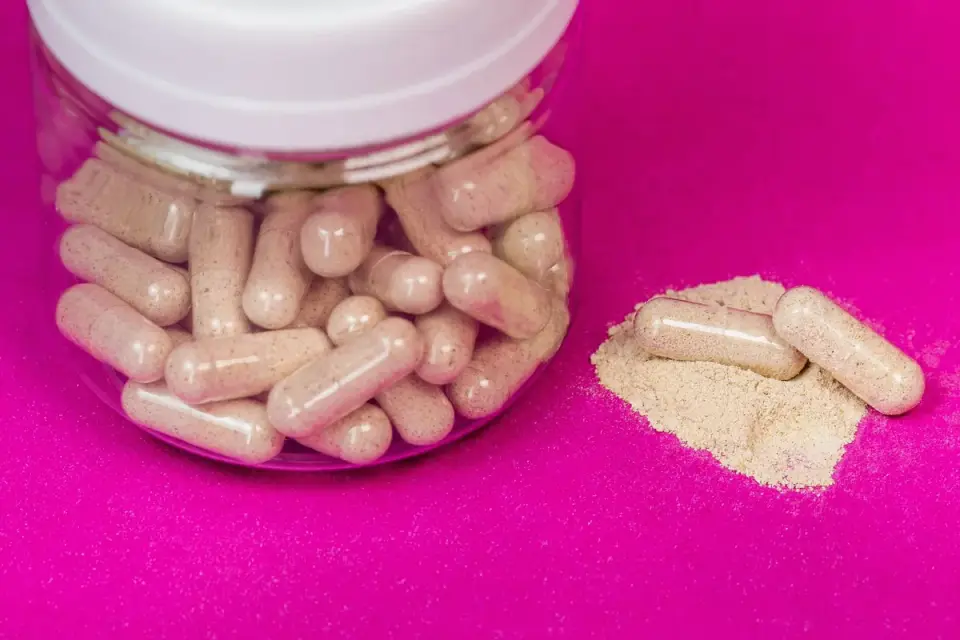
Bottom line: ashwagandha for dogs is one of the few calming ingredients whose evidence base has moved past tradition and into actual canine trials, and that earns it a real place in an integrative plan — but only after you’ve ruled out the medical reasons a dog might look ‘stressed’ in the first place.
Frequently asked questions
Is ashwagandha safe to give a dog every day?
Standardized root extract has a reasonably wide margin of safety in the trials run so far, but daily, ongoing use should still be set up with your veterinarian, especially for dogs with thyroid disease or on other medications.
How is ashwagandha different from melatonin or L-theanine for a stressed dog?
They work on different systems and have different depths of canine evidence; ashwagandha now has its own dog trials, while some calming ingredients still lean on human research or traditional use rather than species-specific studies.
Sources
- A systematic review of KSM-66 ashwagandha and stress reduction — Cureus
- Effects of ashwagandha (Withania somnifera) root extract on aging-related changes in healthy geriatric dogs: A randomized, double-blinded placebo-controlled study — PMC
- Efficacy and safety of standardized Ashwagandha (Withania somnifera) root extract on reducing stress and anxiety in domestic dogs: A randomized controlled trial — ScienceDirect
- A review of L-theanine and anxiety outcomes — Molecular Psychiatry
- Chamomile and stress: a review across species — Biomedicines