
I counsel a lot of owners who assume an older dog with stiff legs should just stay home, and I understand the worry. The surprising limitation is not age itself. It is how long we ask a sore dog to hold still in one position, on one hard surface, without a chance to reset.
My call is simple: keep the travel day built around short movement breaks, predictable footing, and the baseline care plan your veterinarian already set. That structure may help support comfort and mobility on the road, which matters more than any single bed, ramp, or chew. The strongest counterargument is to rest the dog completely to protect the joints, and rest does have a place after exertion. I still land on gentle, frequent motion because prolonged stillness is what tends to make stiffness worse after a car ride or a long night in a strange room.
Last spring I talked through a road trip with an owner of a 12-year-old Labrador mix, about 68 pounds, who took three steps to loosen up after naps and balked at the back seat jump. They were weighing a six-hour drive to family against leaving him with a sitter he did not know well. We mapped fuel stops every 90 minutes for a five-minute sniff walk, packed his familiar orthopedic pad for the back seat, and kept his morning routine identical before loading up. By the second stop he was rising in two attempts instead of four, and that change told us the plan was working better than a single long push would have.
The myth is that good travel means less moving
Many owners hear arthritis and think stillness equals kindness. In dogs with osteoarthritis, described by the American College of Veterinary Surgeons as progressive joint inflammation with stiffness after rest, stillness often backfires. A curled crate ride for four hours can leave a senior stiffer at unload than a well-paced ride with breaks.
Stiffness loves stillness.
That is why I frame travel as joint management, not just transport. VCA Hospitals notes weight, controlled activity, and veterinary pain plans as the foundation for dogs with arthritis, and travel should not pause that foundation. Keep meals, walks, and any prescribed medications on home time as closely as you can. Bring the exact food, a measured scoop, and water from home for the first day if your dog has a sensitive stomach.
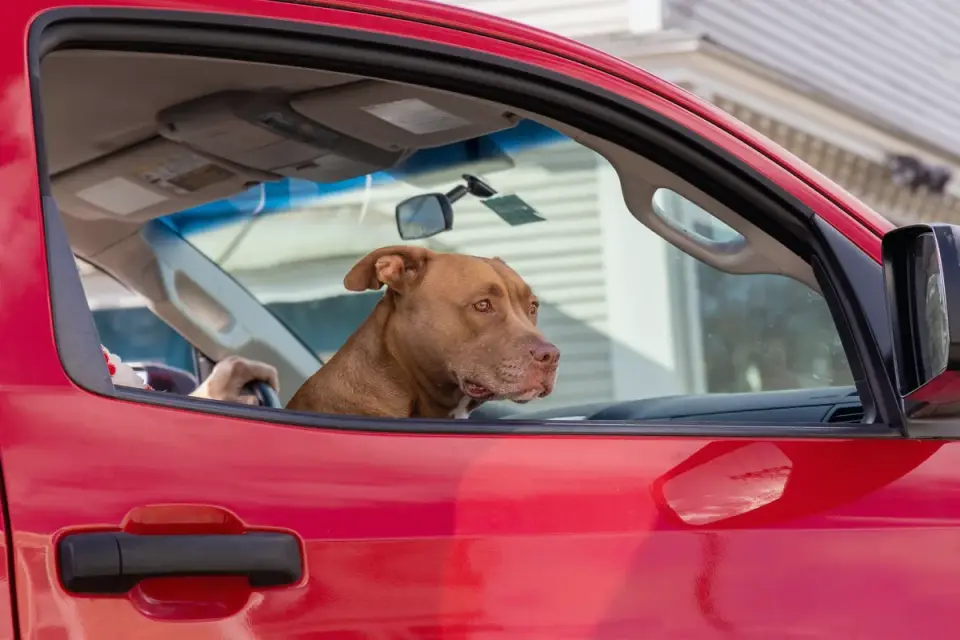
What I change first: the car setup
I had a client who tried to solve everything with a thick new travel bed, then called frustrated because her 10-year-old, 52-pound pit mix still cried when lifted out after three weeks in of weekend errands leading up to the trip. The bed was soft, but the dog still had to jump a high clearance, balance on a slick seat cover, and hold a sit for 40 minutes at a stretch. Softness did not fix access or posture.
For the car, I prioritize low entry over cushion thickness. Use a ramp or low platform with a non-slip surface, and practice at home for a week before you leave. Secure the dog with the restraint you already use — our restraint guide walks through harness versus crate tradeoffs — but add a familiar pad so the surface does not slide under elbows and hips. Keep the car cool and offer a short leashed walk before loading so the first hour is calmer. Plan stops every 1 to 2 hours, even if it adds 30 minutes to the day.
A sequence that holds up past day two
Aging dogs lose their buffer by day two or three of travel, when strange floors, stairs, and missed naps stack up. I saw it with a 9-year-old, 24-pound beagle who did fine on the drive but started refusing the hotel stairs by day 3, after two nights on a cold tile floor with only a thin blanket. The owners had kept walks perfect but missed footing and warmth where he slept. We moved his bed away from the air conditioner, added a non-slip runner to the bathroom tile, and requested a ground-floor room for the rest of the stay. By morning four he was taking the single entry step without pausing, and the owners kept that runner in the car from then on.
That edge case is common: the trip looks like a walking problem but behaves like a flooring problem. The American Kennel Club highlights slippery surfaces and difficulty with stairs as classic signs owners notice at home, and hotels amplify both. Pack two lightweight yoga mats or washable runners, a nightlight for disoriented seniors, and any joint supplements or medications in original containers with a written schedule. If you fly rather than drive, read how to fly with a dog early, and confirm whether your dog can realistically avoid cargo hold stress and long crate holds.
Keep feeding simple on the road with gear that will not tip and a rhythm your dog recognizes — our notes on collapsible bowls and feeding gear can help you keep that routine steady. And if size changes your lift plan or carrier choice, compare small versus large dog travel realities before you promise to carry a 70-pound senior up rental stairs.
What would make this trip easy for your dog to repeat next month without needing three recovery days at home?
Frequently asked questions
How often should I stop on a road trip with a stiff senior dog?
Plan a brief leashed movement break every 1 to 2 hours — five minutes of sniffing and slow walking, a drink, and a chance to urinate. Watch how long it takes your dog to rise afterward; longer warm-ups mean you need shorter driving legs.
Should I skip pain medication for travel day to see how my dog does?
No. Keep the exact baseline plan your veterinarian prescribed and keep timing consistent across time zones. Travel adds stress and awkward postures, so this is not the time to test going without support. Call your clinic before the trip if last time's plan felt thin.
Crate or harness in the car for an arthritic senior?
Choose whichever restraint your dog already tolerates, then fix entry height and footing. A ramp with traction and a non-slip pad usually helps comfort more than switching restraint types the week of travel.
Sources
- Osteoarthritis in Dogs — American College of Veterinary Surgeons
- Arthritis in Dogs — VCA Hospitals