On this page
The call: most food guarding is not aggression in the moody-dog sense — it’s a learned prediction that a resource is about to be taken, and the fix is changing that prediction, not testing the dog’s tolerance for interruption.
I’ve worked with a lot of owners who describe the same arc. A rescued terrier mix, roughly two years old, eats fine for the first few weeks in a new home. Then one evening the kids walk past the bowl at dinner and the dog stiffens, freezes over the food, and growls low in his chest. The owners are stunned — he’d never done that before. What actually happened is more mundane: he’d been guarding all along, just at a level too subtle to notice — a faster gulp when someone approached, a slight body block, ears pinned for a half-second. The growl wasn’t a new behavior. It was the first one loud enough to hear.
The myth: guarding means the dog is dominant or “possessive”
The framing that a guarding dog is trying to be “alpha” over the household is outdated and unhelpful for actually solving the problem. Resource guarding is a stress response built around a simple prediction — someone might take this away — reinforced any time that prediction turns out to be true. A toddler who grabs a chew, a well-meaning owner who “tests” the dog by reaching into the bowl mid-meal, a second dog who muscles in: each of these confirms the dog’s worry and makes the next meal a little tenser.
That distinction matters because it changes the whole treatment plan. If you believe the dog is trying to dominate the household, the instinct is to assert control — take the bowl away repeatedly, physically correct the growl, “show him who’s boss.” If you understand it as an anxiety-driven prediction about resource loss, the plan flips: reduce the perceived threat, and the guarding usually softens.
Reading the reality: what’s actually happening at the bowl
Guarding sits on a spectrum, and most dogs don’t jump straight to a bite.
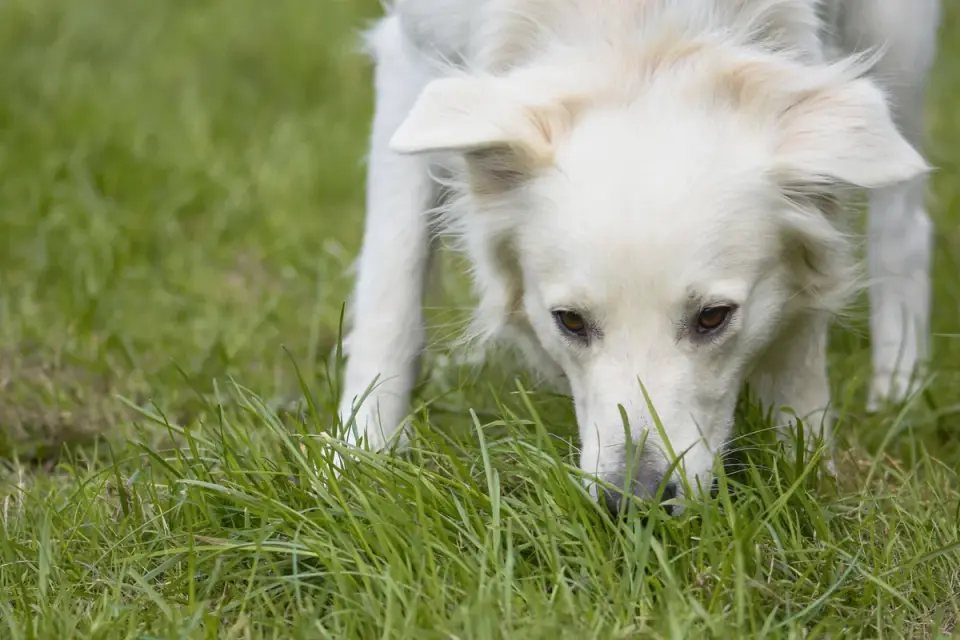
The early signals are subtle: eating faster as someone approaches, a hard stare without moving the head, a slight lean or body block between the dog and the person. The middle tier adds a low growl, lip lift, or hard freeze. The dog is telling you, escalating in volume, that the current approach is too much too soon. Punishing that communication — yelling, grabbing the collar, forcing the bowl away — doesn’t remove the guarding instinct. It removes the warning. A dog corrected hard enough for growling often learns to skip straight to snapping next time, because the growl stopped working as a way to create distance.
It’s also worth separating food guarding from a broader unease around handling or touch, since the two get lumped together and treated the same way when they shouldn’t be. A dog who only tenses at the food bowl but is relaxed everywhere else has a narrower problem than one who reacts to petting, grooming, or being reached for in general — and Why Does My Dog Growl When I Pet Him? is a useful next read if the guarding shows up outside mealtime too. Guarding around a doorway or gate, rather than a bowl, points toward something closer to barrier frustration than resource guarding proper, and the two call for different handling.
The sequence I actually walk owners through
Start by removing the setup that’s reinforcing the behavior, before doing any active training.
1. Stop testing the dog. Reaching into the bowl “to make sure he’s okay with it,” taking food away and giving it back, or letting kids walk right up during meals — all of these rehearse the exact scenario the dog is anxious about. Feed in a low-traffic spot, and give the dog space to eat undisturbed while you build a new plan.
2. Trade up instead of taking away. When you do need to approach a guarded resource, walk up and drop something better than what’s already in the bowl — a piece of chicken, a spoon of plain pumpkin — then walk away. Over repeated sessions the dog’s association shifts from “someone approaching means I might lose this” to “someone approaching means more shows up.” This is slow, deliberate counter-conditioning, not a one-time trick, and rushing the distance or frequency usually sets it back.
3. Manage the household in the meantime. Feed dogs separately if there’s more than one in the home, keep young children away from feeding areas entirely rather than relying on supervision alone, and don’t hand-feed as a test of trust. Management isn’t a failure — it’s what keeps everyone safe while the underlying association is actually changing, which takes weeks, not days.
4. Bring in a professional for anything past a freeze or growl. A dog who has snapped or bitten over food, guards multiple types of resources (toys, resting spots, a person), or shows guarding alongside guarding of humans needs a certified trainer or veterinary behaviorist doing hands-on work, not a guide. This is a genuine safety issue, especially in homes with children, and it deserves in-person assessment.
One dog I worked with, a fifty-pound shepherd mix around age three, had escalated from freezing to a hard air-snap by the time his owners called. We pulled the bowl-testing entirely, moved his meals to a closed laundry room away from foot traffic, and spent about six weeks on trade-up conditioning with a long-handled spoon before anyone approached at normal distance again. The freeze softened first — he’d glance up instead of locking eyes — long before the guarding fully resolved. That kind of staged improvement, not an overnight fix, is the realistic timeline most owners should expect.
Where calming support genuinely fits, and where it doesn’t
Some owners ask whether a calming supplement can take the edge off a guarding dog. It’s worth being direct about the limits here: nothing sold over the counter changes a learned resource-guarding association, and no supplement is a substitute for the management and counter-conditioning steps above. Where calming ingredients may genuinely help is as a secondary layer for a generally anxious dog, lowering baseline stress enough that training sessions land better.
L-theanine, an amino acid found in tea, has been studied for its calming properties, and a review notes a positive effect on anxiety in at least one human trial using Molecular Psychiatry: 400 mg per day for eight weeks — evidence drawn from human research, not canine studies, so treat it as a plausible mechanism rather than a proven dog dose. Ashwagandha has a similarly mixed-but-promising picture: a systematic review in Cureus concluded the herb “has a moderate positive impact on stress reduction and cognitive performance” across multiple randomized trials, again largely in human subjects. Chamomile sits further back on the evidence ladder — for most species, including dogs, the support is Biomedicines: mainly preclinical or traditional-use evidence rather than controlled clinical data, which is a meaningfully weaker basis for a recommendation.
The honest read: if you’re choosing a calming aid, treat it as a possible assist for general anxiety, not a fix for guarding itself, and don’t let it delay the behavioral work above. A dog who guards food because a toddler kept reaching for his bowl isn’t going to stop because of an ingredient in a chew.
The bottom line
Food guarding is a prediction problem, not a dominance problem, and it responds to changing that prediction — space, trade-ups, and consistent management — far more reliably than correction ever does. Treat the growl as information rather than defiance, stop rehearsing the scenario that’s reinforcing it, and loop in a professional the moment the behavior includes a snap or bite. That sequence, done patiently, is what actually moves the needle; a calming supplement, at best, is a supporting player. Puppies showing early guarding-adjacent behavior around chews or hands are worth addressing early too, and How to Stop Puppy Biting and Mouthing covers the groundwork that makes later resource work easier.
Frequently asked questions
Is a dog that guards food dangerous?
Not automatically — many dogs stay at the freezing or growling stage and never escalate. Risk rises with children in the home, guarding of multiple resource types, or any history of a snap or bite, all of which warrant professional help rather than a wait-and-see approach.
Should I punish a dog for growling over food?
No. The growl is a warning, not the problem itself. Suppressing it with correction tends to remove the warning stage, not the underlying guarding, which can make the next incident less predictable.
How long does it take to reduce food guarding?
Plan on weeks of consistent trade-up conditioning rather than days. Improvement is usually staged — less freezing before less growling — and cases involving a bite history need hands-on professional guidance rather than a fixed timeline.
Sources
- L-theanine and anxiety: a systematic review — Molecular Psychiatry
- Ashwagandha for stress reduction: a systematic review — Cureus
- Chamomile in anxiety and stress across species — Biomedicines