
On this page
- Where the warning signs actually start
- How the escalation actually plays out
- Fear versus offense: why the label matters more than the behavior
- Rule out the body before you rewrite the behavior
- Where calming support realistically fits — and where it doesn’t
- What to actually do in the moment
- When a trainer isn’t enough
- A realistic timeline, not a promise
- The short version
Every week I see a version of the same visit. The owner says the dog was “fine, then suddenly snapped.” The dog usually was not fine. It was tolerating something for longer than it should have had to, and nobody in the room was reading the signals it had been sending the whole time.
What owners call “aggression” is rarely one thing. It’s a catch-all label we put on a dog that growled at the vacuum, snapped at a toddler reaching for its ear, or lunged at another dog on a walk — three completely different mechanisms wearing the same word. Some of it is fear. Some is resource guarding. Some is genuine offense, where a dog is actively seeking a confrontation rather than trying to escape one. The plan changes entirely depending on which one you’re dealing with, which is why I’d rather spend this article helping you sort the mechanism than hand you a checklist of scary behaviors.
I had a client bring in a nine-year-old Cavalier King Charles Spaniel named Wilbur, about 19 pounds, because he had “attacked” her son out of nowhere while the boy was tucking a blanket around him on the couch. When we talked through it slowly, Wilbur had gone stiff, turned his head away, and shown the whites of his eyes for a full two or three seconds before the snap — the family had simply never been taught to notice any of that. Wilbur also turned out to be sore over both hips on exam. Nothing about that dog was suddenly, inexplicably dangerous. He had been telling everyone in that living room he was uncomfortable, in the only vocabulary he had left once the earlier signals were missed.
Where the warning signs actually start
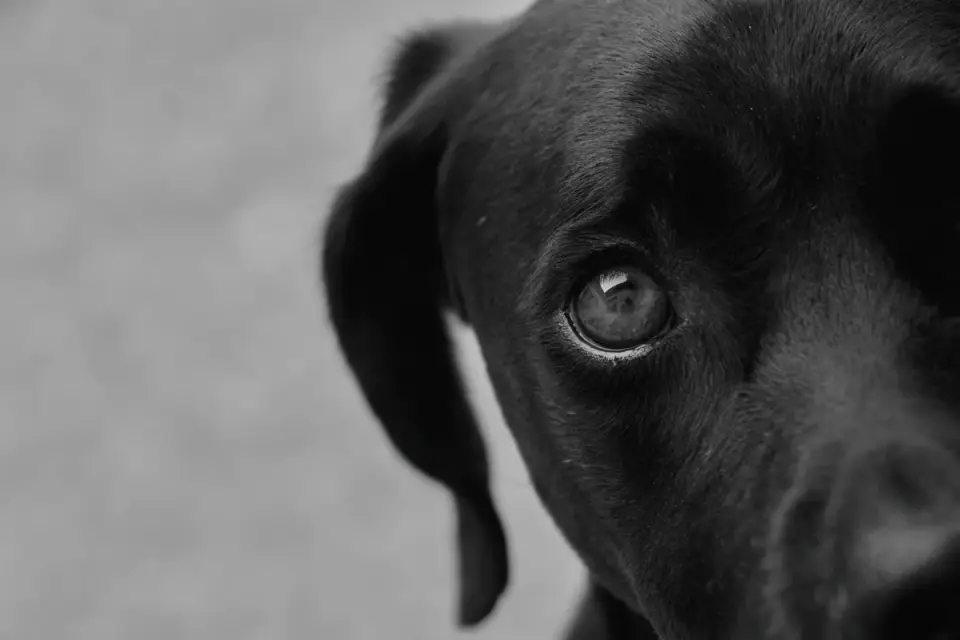
The signals almost never begin with teeth. They begin with small, easy-to-miss body language: a closed mouth that suddenly goes still, a single lip lick with no food nearby, a yawn outside of nap time, weight shifted onto the back legs, ears pinned flat, or “whale eye” — the half-moon of white showing at the corner of the eye when a dog turns its head away but keeps watching the thing that worries it. None of these mean a bite is imminent. They mean the dog has already decided it doesn’t like what’s happening and is asking, politely, for it to stop.
Freezing is the one I’d flag hardest for owners to learn, because it looks like calm and it is the opposite of calm. A dog that goes completely still — body locked, eyes fixed — has usually run out of other options and is one small push away from escalating. If you see that stillness during a hug, a nail trim, or a kid leaning in for a photo, that’s the moment to create space, not the moment to keep going because the dog “isn’t doing anything.”
How the escalation actually plays out
When the early signals get missed — and they usually do, because they’re subtle and often mistaken for the dog being tired, shy, or “a little quirky” — the dog moves up. A stiff freeze becomes a low growl. A growl that gets punished or ignored becomes a snap with no growl at all, because the dog has learned the growl doesn’t work and skips straight to the part that does. That’s the single most important reason not to scold a growling dog: you’re not removing the aggression, you’re removing the warning label.
Growling that gets punished away teaches silence, not calm.
By the time you’re at open-mouth snapping, lunging with contact, or a bite that breaks skin, you’re at the top of an escalation that had several earlier, quieter off-ramps. That’s worth sitting with, because it reframes the whole problem: a dog that “bit without warning” is far more often a dog whose warnings were consistently missed, not a dog that skipped the warning stage. If you want a closer look at one very common early-signal scenario, we’ve written specifically about growling during petting and handling, which walks through the pattern most owners run into first.
Fear versus offense: why the label matters more than the behavior
Fear-based aggression is trying to increase distance from something the dog finds threatening — a stranger, a vacuum, a specific vet clinic smell. The dog’s whole strategy is to make the scary thing go away, and it will de-escalate the moment that happens. Offensive aggression is different: the dog is moving toward a confrontation, sometimes over a resource, sometimes over territory, sometimes for reasons that are genuinely harder to pin down without a full behavioral history. Punishing a fear-based response tends to make the fear worse and the aggression more unpredictable. Working the wrong plan against the wrong mechanism is how well-meaning owners end up with a dog that’s harder to manage six months later than it was on day one.
This is also where breed generalizations do real harm. Any dog, of any size or breed, can land on either end of that spectrum. What predicts risk is history, body language, and context — not the shape of the dog’s head.
Rule out the body before you rewrite the behavior
Pain is the most commonly missed driver of a new or worsening aggression case I see in practice, and it’s the first thing I check for regardless of what the owner tells me happened. Arthritis, dental disease, ear infections, and neurological changes in older dogs can all turn a normally tolerant animal into one that guards its space hard. Thyroid dysfunction has a documented, if debated, association with irritability in some dogs. Nutritional gaps matter too — if you haven’t already, it’s worth knowing the broader signs that something is off metabolically, including the pattern we cover in our guide to taurine deficiency in dogs, since systemic illness can show up as behavior change well before it shows up as anything else. A dog that “turned aggressive out of nowhere” at age eight or nine deserves a full veterinary workup before a single training session.
Where calming support realistically fits — and where it doesn’t
I get asked constantly whether a supplement can take the edge off a reactive or aggressive dog, and I want to be direct about the ceiling here: nothing in this category treats aggression. What the better-studied calming ingredients can plausibly do is take some pressure off a dog’s baseline stress level while you and a trainer do the actual behavioral work.
Chamomile has a long history of traditional use for relaxation, though a recent review in Biomedicines notes that outside a handful of species, the evidence base is still mostly preclinical or traditional rather than clinical. Ashwagandha, particularly the KSM-66 extract studied in humans, fares somewhat better: a systematic review in Cureus covering multiple randomized controlled trials found a moderate positive effect on stress reduction and cognitive performance. L-theanine has more mixed human data — a review in Molecular Psychiatry found benefit in most anxiety measures except one study on psychotic anxiety, at a dose of 400 mg per day over eight weeks. None of that is canine bite-prevention data, and I won’t pretend it is. Frame any calming supplement as support for a dog’s overall stress load, never as a substitute for behavior modification or a veterinary workup.
What to actually do in the moment
Create distance first, every time. Don’t lean in, don’t reach for the collar, don’t reassure with touch if the dog is stiff or frozen. Move the trigger away or move the dog away, whichever is faster and safer. Once the dog has settled, resist the urge to test the situation again immediately just to see if it’s “really” a problem — that’s how minor incidents become bigger ones.
I once worked with a family whose 4-year-old, 62-pound Boxer named Otis had started guarding the hallway near the baby’s room after their second child arrived. The owners’ instinct was to keep walking through anyway to prove nothing was wrong. Within about three weeks that had gone from a stiff body and a hard stare to an actual air-snap. Once they stopped forcing the interaction, gave Otis a wide, calm path around the hallway, and brought in a trainer who worked strictly with positive reinforcement, the guarding dropped noticeably within the first month. I’m not presenting that as a guaranteed outcome — every dog’s timeline differs — but it’s a fair example of how quickly avoidable escalation can happen, and how quickly some of it can reverse once the pressure comes off.

When a trainer isn’t enough
Most fear-based reactivity and plenty of resource guarding respond well to a qualified force-free trainer working alongside your veterinarian. But there’s a point where you need more than training: any bite that broke skin, aggression that’s escalating despite consistent management, aggression toward family members inside the home, or a dog whose triggers keep expanding to new people, places, and objects. The American Veterinary Society of Animal Behavior is unambiguous that behavior modification plans — including for aggression — should never rely on aversive or punishment-based methods, since punishment tends to suppress warning signals rather than resolve the underlying emotional state. For genuinely stuck or high-stakes cases, the American College of Veterinary Behaviorists is the credential to look for: a board-certified veterinary behaviorist can combine a full medical workup, a structured behavior plan, and medication when it’s warranted, in one coordinated approach.
A realistic timeline, not a promise
I tell every client the same thing at the first visit: expect weeks, not days, and expect the plan to change as you learn more about what’s actually driving the behavior. A dog with straightforward fear of strangers might show real, visible improvement in four to eight weeks of consistent, low-pressure work. A dog with a longer history, multiple triggers, or an underlying medical contributor may take several months, sometimes with medication involved, before you see the kind of change that feels durable. If you’re already using a calming chew as one small piece of that plan, that’s fine as an adjunct — and if your dog is older and struggles with straight chews, our piece on whether you can crush a longevity chew into senior food covers how to keep that piece workable without it becoming its own daily battle. What I won’t do is promise a fixed number of weeks, because I’ve watched too many “textbook” cases take longer, and too many “hard” cases come around faster than expected once the actual driver — pain, fear, or a missed medical issue — got addressed directly.
The short version
- Real warning signs start small: lip licks, yawns, freezing, whale eye, and weight shifted backward, long before a growl.
- Punishing a growl doesn’t remove aggression, it removes the warning, which raises risk rather than lowering it.
- Fear-based and offense-based aggression need different plans; treating them the same makes things worse.
- Pain, thyroid changes, and other medical issues are common, underdiagnosed drivers of new aggression, especially in older dogs.
- Calming ingredients like chamomile, ashwagandha, and L-theanine may support overall stress load, but none of them treat aggression on their own.
- Skin-breaking bites, in-home aggression toward family, or escalating triggers warrant a board-certified veterinary behaviorist, not just a trainer.
Frequently asked questions
Is growling always a sign of aggression?
No. Growling is communication, not a diagnosis. It usually means a dog wants more space or for something to stop, and it's one of the more useful, honest signals a dog gives — punishing it tends to backfire by teaching the dog to skip straight to a snap next time.
Can a dog become aggressive suddenly with no warning at all?
True zero-warning aggression is uncommon. Far more often, the early signals — freezing, lip licking, whale eye, a stiff posture — were present but not recognized. A sudden change in an older dog is also a strong reason to check for pain or an underlying medical cause first.
Sources
- Position Statements — American Veterinary Society of Animal Behavior
- Position Statement — American College of Veterinary Behaviorists
- Anxiolytic Herbs in Animals: A Review of Preclinical and Traditional Evidence — Biomedicines
- Ashwagandha for Stress and Cognitive Performance: A Systematic Review — Cureus
- L-Theanine and Anxiety: A Systematic Review and Meta-Analysis — Molecular Psychiatry