
Call a trainer for skills. Call a certified behaviorist for a behavior problem that’s stuck. Call a veterinary behaviorist the moment pain, a medical condition, or medication might be part of the picture. That’s the order I give clients, and I give it fast, because the wrong first call usually just delays the right one.
The myth almost every owner walks in with: “behaviorist” means something official. It doesn’t, not by itself. In most states, anyone can print “dog behaviorist” on a business card with no license, no exam, and no oversight body checking their work. Compare that to a veterinary behaviorist, a DVM who completed a residency and is board-certified through the American College of Veterinary Behaviorists, or a Certified Applied Animal Behaviorist (CAAB) credentialed through the Animal Behavior Society. Those two titles mean something specific. A trainer’s certifications, like CPDT-KA through the Certification Council for Professional Dog Trainers, mean something specific too, just for a different job: teaching skills and managing everyday behavior, not diagnosing or treating a clinical behavior disorder.
I remember a Bernese Mountain Dog named Otto, six years old, about 95 pounds, whose owners brought him in after two group classes and one private trainer failed to touch his resource guarding around the food bowl. He’d gone from a low growl to snapping at the air within about three weeks, always in the kitchen, always right as the bowl hit the floor. The trainer had done nothing wrong technically, she’d used food-based counterconditioning correctly, but Otto’s guarding had a component she wasn’t licensed to evaluate: worsening hip pain that made him brace defensively whenever anyone approached while he was eating and vulnerable. Once we treated the pain, the guarding dropped by more than half within two weeks, and the behavior plan the trainer had already built finally started to work.
Puppyhood and adolescence: this is trainer territory, almost always. A puppy who mouths, jumps, doesn’t recall, or hasn’t learned to settle needs skills, not a diagnosis. Look for a certified trainer who uses reward-based methods and can show you a plan, not just a list of commands. This is also the window for socialization work, and it’s a good stretch to start reading up on normal adolescent behavior swings, including things like why a young dog might start growling when petted out of overstimulation rather than aggression. A trainer can usually walk a family through that without escalation.
Adulthood: this is where cases start needing a behaviorist, and sometimes a veterinary one. If a trainer has run a structured plan for several weeks with no meaningful movement, or if the behavior involves biting, severe fear, or resource guarding that’s intensifying, it’s time to step up. A certified behaviorist or a veterinary behaviorist will build a written plan grounded in learning theory and, when it’s a veterinary behaviorist, can also run bloodwork, evaluate pain and neurologic causes, and prescribe medication if the dog’s anxiety is too high for behavior modification to get traction on its own. This is the group I refer to for anything involving redirected aggression, panic-level noise phobia, or self-injurious behavior. A trainer alone should not be managing those cases, and a good trainer will tell you that themselves and refer out.
One of the adult dogs I worked with, a two-year-old Vizsla named Ruby, started pacing and drooling before every thunderstorm, then began generalizing to any loud bang, a door slam, a dropped pan. Her owners had tried two trainers over four months with a solid desensitization protocol that simply couldn’t get past her baseline arousal. We referred to a veterinary behaviorist, who added a fast-acting anti-anxiety medication for storm days on top of the trainer’s existing plan. Within a month, Ruby could stay in the same room during a moderate storm instead of trying to get through a door. The training work hadn’t failed; it needed a partner who could address the physiology underneath it.
The senior years: rule out medical causes before you call anyone about “behavior.” A sudden personality change, new aggression, disorientation, or a shift in a sleep-wake cycle in an older dog is a veterinary appointment first, not a training appointment. Cognitive decline, pain, thyroid disease, and sensory loss all mimic behavior problems and none of them respond to a training protocol built for a younger, healthy dog. If your senior dog has started pacing after dark, that’s worth reading about specifically, since nighttime pacing in senior dogs has its own set of medical differentials before behavior modification even enters the conversation.
Where calming support fits, and where it doesn’t. Some ingredients have real, if limited, evidence behind them for everyday stress, and they can be a reasonable add-on to a training or behavior plan, never a substitute for one. Chamomile and valerian root have a long history in traditional herbal care for relaxation, though for chamomile specifically, a review in Biomedicines notes that “for the remaining species, evidence is derived mainly from preclinical studies or traditional use,” meaning the dog-specific clinical data is thin. Ashwagandha has more behind it: a systematic review published in Cureus “analyzed multiple RCTs and concluded that ashwagandha has a moderate positive impact on stress reduction and cognitive performance,” though that body of evidence is largely human research. L-theanine has been studied in a similar direction; a review in Molecular Psychiatry found a meaningful effect in one trial “on psychotic anxiety (SMD = 0.54; 400 mg/day for 8 weeks),” a dose and population specific enough that it shouldn’t be assumed to translate directly to dogs. None of this replaces a diagnosis. If you’re considering how a calming chew fits alongside a senior dog’s existing routine, it’s worth understanding how these products are meant to be given before you start improvising with dosing.
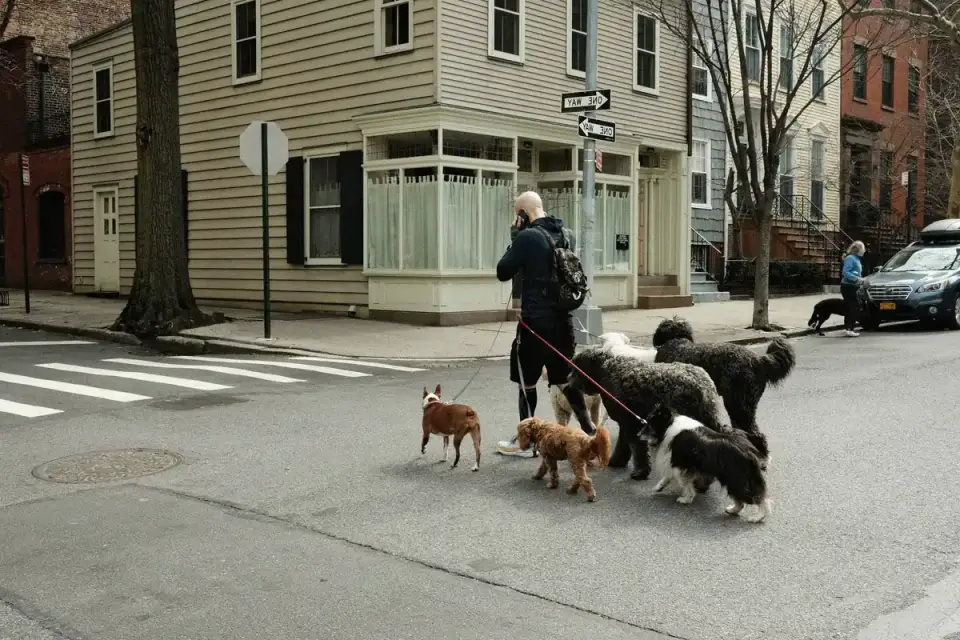
The sequence I actually walk owners through. Start with your regular veterinarian for any behavior change that’s new, sudden, or paired with a physical symptom, because ruling out pain and illness has to happen before anyone builds a behavior plan on top of it. If the workup is clean and the issue is a skill gap, like leash pulling, jumping, or basic manners, go to a certified trainer. If a trainer’s plan stalls after a genuine, consistent effort, or the behavior involves aggression, or your own vet flags it as something beyond routine training, ask for a referral to a veterinary behaviorist or a Certified Applied Animal Behaviorist. Keep a written log of when the behavior happens, what precedes it, and how the dog recovers afterward; every professional in this chain will ask for it, and it shortens the time to the right diagnosis considerably.
The bottom line: match the credential to the problem, not the other way around. A trainer teaches skills, a certified behaviorist treats behavior problems with learning-theory-based plans, and a veterinary behaviorist is the only one of the three who can also diagnose and medically treat the biology driving the behavior. When in doubt, especially with anything sudden, painful-looking, or involving a bite, start with your veterinarian and let them route you from there.
Frequently asked questions
Is a "dog behaviorist" a licensed professional?
Not automatically. The title isn't legally protected in most states, so anyone can use it. Look for actual credentials, such as board certification through the American College of Veterinary Behaviorists or certification as a Certified Applied Animal Behaviorist through the Animal Behavior Society.
Can a regular trainer handle aggression?
Some trainers with advanced experience can help with mild cases, but escalating aggression, resource guarding, or bite history generally needs a certified behaviorist or veterinary behaviorist who can also rule out medical and pain-related causes.
Do I need my veterinarian involved before seeing a trainer?
For sudden or severe behavior changes, yes. Ruling out pain, illness, or a medical cause first prevents a training plan from being built on top of an undiagnosed medical problem.