Why a Senior Dog Loses Weight While Eating Normally
Medically reviewed by Christopher Ferrell, DVM, DACVS (SA) — For general education — not a substitute for veterinary care.
When a senior dog keeps losing weight while eating normally, an underlying medical cause usually needs veterinary workup.

On this page
When a senior dog keeps losing weight while eating normally, an underlying medical cause usually needs veterinary workup. That’s the short version. The longer version is worth understanding, because the pattern itself — a dog that clears the bowl but still loses condition — is a clinical clue, not a coincidence.
What does “losing weight while eating normally” actually tell you?
In surgical practice, a case rarely resolves by treating the symptom you were handed; you treat the mechanism underneath it. Weight loss with a preserved appetite works the same way. It tells you the problem probably isn’t intake. Food is going in. Something downstream — absorption, metabolism, or a competing energy drain like a tumor — is where the calories are being lost. That’s a materially different diagnostic path than a dog that’s simply eating less.
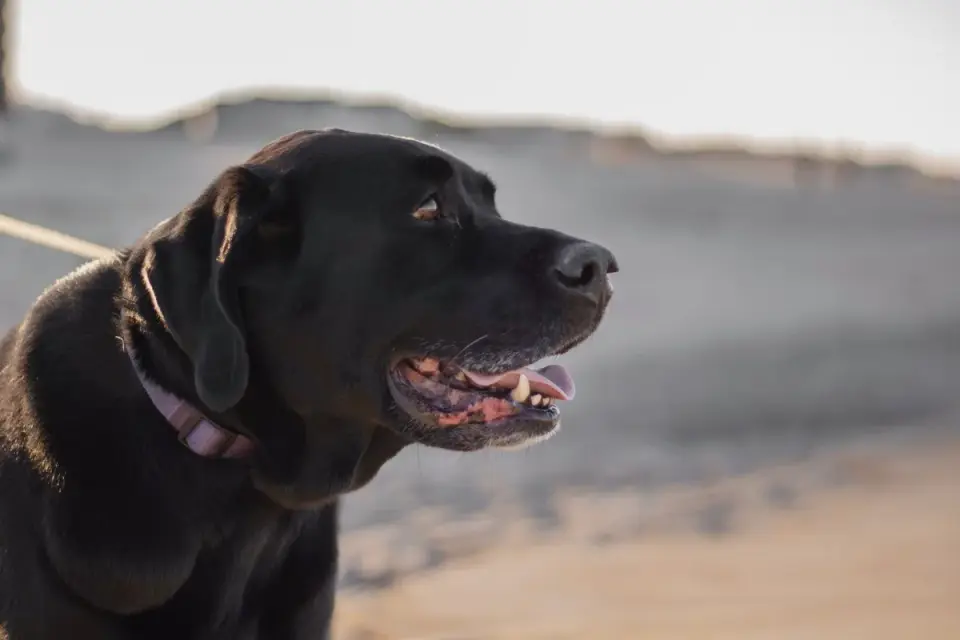
The short list of causes that show up again and again
A few conditions account for most of these cases in older dogs:
- Kidney disease. Failing kidneys let toxins build up, which drives nausea and muscle wasting even when a dog is still willing to eat.
- Diabetes mellitus. The body can’t use glucose properly, so it starts burning fat and muscle for fuel — often alongside increased thirst and urination.
- Cancer. Tumors raise the body’s baseline energy demand and can quietly outcompete normal metabolism for resources, regardless of how much a dog eats.
- Exocrine pancreatic insufficiency (EPI). According to the Malabsorption Syndromes in Small Animals: Merck Veterinary Manual’s entry on malabsorption syndromes, diarrhea and weight loss despite an increased appetite are the hallmark signs of malabsorption, and EPI is a leading cause of it.
- Chronic heart or dental disease. A weakened heart reduces circulation and appetite over time; painful teeth can make a dog swallow food whole without chewing, which limits how much actually gets digested.
That’s a wide net. It’s also the reason guessing at home rarely gets anyone closer to an answer.
Why the appetite so often stays intact
Here’s the part owners find counterintuitive: with EPI specifically, appetite doesn’t just stay normal — it frequently increases. The Merck Veterinary Manual’s page on exocrine pancreatic insufficiency in dogs and cats notes that affected dogs are commonly polyphagic — they eat more, not less — because the pancreas has lost the capacity to produce the enzymes needed to break food down. The dog is hungry because the nutrients from the last meal never really landed. That single fact is why appetite alone is such an unreliable filter for ruling out serious disease in a senior dog.
Something similar can happen with early diabetes and some hormonal disorders: intake goes up or stays flat while the body’s ability to use those calories collapses.
What a proper veterinary workup covers
According to the AAHA senior care guidelines, the minimum database for an unhealthy senior pet should include a detailed blood profile, a thyroid panel, and a urinalysis, with imaging added based on what those results suggest. A pragmatic sequence looks like this:
- Weigh the dog and record a body condition score at the visit, not from memory.
- Run bloodwork, a urinalysis, and a thyroid panel as the baseline screen.
- If those come back unremarkable but the weight loss continues, move to pancreatic-specific testing (serum trypsin-like immunoreactivity) and abdominal imaging.
- Reassess weight and condition at defined intervals — not “whenever it comes up again.”
The goal is a trend line, not a single data point. A dog seen once every twelve months on an annual exam can lose a meaningful percentage of body weight between visits without anyone noticing until the change is advanced.
What you can track at home before the visit
A kitchen scale and a notebook do more here than most owners expect. Weigh your dog every two to four weeks, same time of day, and write it down. Note stool consistency, water intake, and energy level alongside it. If your dog’s energy also dropped around the same window, it’s worth reading how NAD+ precursor chews are evaluated for a dog whose energy dropped after turning 8 — but that’s a supportive-care conversation to have only after the diagnostic questions above are answered, not instead of them. Structure/function supplements built around antioxidants or NAD+ precursors are formulated to support normal cellular aging; none of them are a substitute for identifying why a senior dog is actively losing weight.
If a heart condition is on the differential list, changes in energy and stamina often show up before weight loss becomes obvious enough to weigh in on — the same logic that applies to taurine deficiency signs in dogs worth knowing. And because cognitive decline can quietly reduce how motivated a dog is to seek out food even when it’s placed in front of them, it’s also worth ruling out the kind of appetite-adjacent changes covered in whether MCT oil is safe for senior dogs with cognitive decline.
When to escalate
Don’t wait out a full quarter of continued loss to see if it levels off. Book the appointment once you have two consistent weigh-ins showing a downward trend, note it as a same-week concern rather than a routine annual topic, and bring your log with you. The dog’s body is already telling you something changed; the workup is how you find the mechanism behind it — and that’s a case worth catching early rather than managing after the fact.
Frequently asked questions
Is it normal for old dogs to just get thinner?
Some loss of muscle mass with age is expected and is often called sarcopenia. But a dropping number on the scale combined with a normal or increased appetite is not something to chalk up to aging alone — it warrants bloodwork.
How much weight loss in a senior dog is concerning?
Most veterinarians treat a loss of roughly 10% of body weight as a threshold that justifies a full diagnostic workup, according to the AAHA senior care guidelines' emphasis on tracking body condition over time.
Could it just be a diet or food quality issue?
It's worth ruling out, but if the diet and portion size haven't changed and the dog is still losing ground, the more likely explanation is a disease process interfering with digestion, absorption, or metabolism rather than the food itself.
Should I try a supplement before seeing the vet?
No. Antioxidant and NAD+-precursor supplements are marketed as support for cellular health and normal aging, not as treatments for unexplained weight loss, and they shouldn't delay diagnostics for a dog that's actively losing condition.
Sources
- Evaluating the Unhealthy Senior Pet — AAHA
- Exocrine Pancreatic Insufficiency in Dogs and Cats — Merck Veterinary Manual
- Malabsorption Syndromes in Small Animals — Merck Veterinary Manual