
On this page
A ten-year-old dog who flinches at the dishwasher he’d napped through for a decade isn’t developing a personality quirk, he’s telling you something changed in his ears, his joints, or his brain, and figuring out which one starts with a careful look rather than a training plan.
Picture the scene: the vacuum comes out, and instead of the usual bored sigh, your dog scrambles off the rug and bolts for the hallway. Or a door closes down the block and he startles like it happened next to his ear. Owners often read this as fear or stubbornness creeping in with age. In my rehab practice, I read it as data. Dogs don’t change their threshold for sound without a reason, and in older dogs that reason is almost always physical before it’s behavioral.
Three things are usually driving it
Start by ruling things out in order of how commonly they’re missed, not how dramatic they sound.
Pain. A dog with sore hips, an arthritic spine, or a stiff neck startles harder because a sudden noise triggers a reflexive full-body flinch, and that flinch hurts. The American Kennel Club notes that dogs responding with fear to loud noises could be hiding musculoskeletal pain, since a startling sound can cause a dog to jump or tense in a way that loads an already inflamed joint. That’s a pattern I see constantly on the underwater treadmill: dogs who flinch at cart noise in the clinic move noticeably easier once their pain is addressed.
Hearing change. This one seems backwards until you understand how presbycusis works. Rather than going quiet, an aging ear often becomes less predictable. According to a review in Veterinary Practice, age-related hearing loss in dogs usually begins between 8 and 10 years old and affects the middle-to-high frequencies first, so a dog can miss a whistle or a doorbell yet startle hard at a sound in a range he can still detect, arriving with no warning because the softer cues that used to precede it never registered.
Cognitive change. Canine cognitive dysfunction syndrome doesn’t only show up as wandering or house-training lapses. Research on cognitive impairment in dogs, summarized in PMC, documents exaggerated startle responses on neurological exam, along with new fears and phobias that weren’t present earlier in life. In TCVM terms, I think of this as a Shen (spirit/mind) pattern losing its anchor, where the aging brain has less reserve to buffer a sudden stimulus and reacts before it settles.
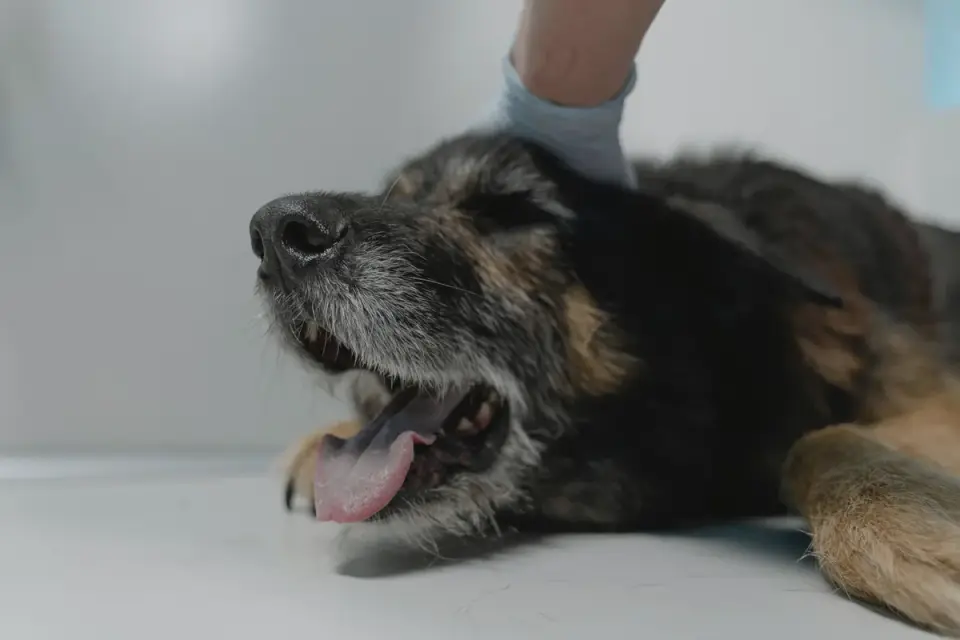
What to actually do about it
Work through this in order rather than guessing at all three at once.
- Book a vet visit and say the word “startle” out loud, not just “anxiety.” That single word changes what your vet checks first.
- Ask for a hands-on orthopedic exam, including the spine and neck, not just the hips. Sore necks get missed constantly and produce outsized flinch responses.
- Request a basic hearing assessment. A vet can screen for asymmetric hearing loss or an ear infection with an otoscope in minutes.
- If pain and hearing come back clear, ask specifically about a cognitive screen using a validated questionnaire. Don’t let “he’s just getting older” end the conversation.
- Keep a short log for a week: what sound, what time of day, what he was doing beforehand. Patterns point vets toward the right system faster than a vague description does.
Don’t skip the exam and jump straight to calming aids or desensitization training. Those tools help once you know what you’re managing, but used first they can mask a treatable pain source for months.
Making the house a little less startling in the meantime
While you’re working through diagnosis, a few adjustments help without waiting on results. Approach a resting senior dog from where he can see you rather than from behind, since a dog who can’t hear you coming startles harder at touch than at sound. Keep footing non-slip near his bed so a startle reaction doesn’t end in a slide on hardwood, which compounds joint strain on top of the flinch itself. Predictable routines also help a cognitively softer brain, because familiar sequencing gives it less to interpret in a hurry.

A newly jumpy senior dog isn’t losing his nerve on his own. He’s usually losing information, comfort, or both, and a vet visit is how you find out which.
According to VCA Animal Hospitals, noise sensitivities in dogs of any age are worth addressing directly rather than managing around, since untreated fear responses tend to generalize to more triggers over time rather than fade on their own.
The bottom line
When an old dog starts flinching at sounds he used to sleep through, treat it as a three-item checklist, pain, hearing, cognition, and let your vet work through it in that order before you assume it’s just age catching up with his personality.
Frequently asked questions
Could my old dog's new startle response just be old age, nothing to worry about?
Age brings the underlying changes, but a sudden shift is still worth a visit. A vet exam can tell you whether you're dealing with treatable pain, hearing decline, or early cognitive change, and each one is managed differently.
Will my dog's startling get worse over time?
It depends on the cause. Hearing loss and cognitive decline both tend to be gradual and progressive, while pain-related startling can often improve with treatment. That's why sorting out the cause matters more than just waiting it out.
Sources
- Has Your Dog Become Sensitive to Noise? It Could Be Undiagnosed Pain — American Kennel Club
- The latest in neurology – presbycusis and quality of life in companion dogs — Veterinary Practice
- Novel Diagnostic Tools for Identifying Cognitive Impairment in Dogs: Behavior, Biomarkers, and Pathology — PMC
- Fear of Noises in Dogs — VCA Animal Hospitals