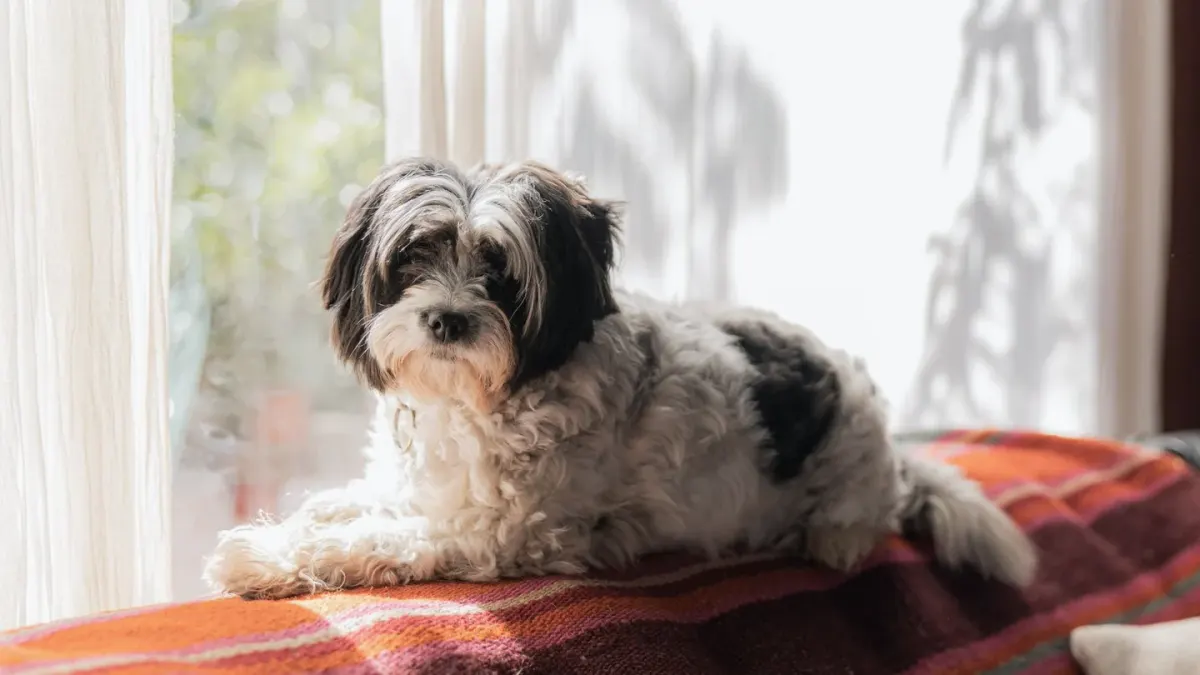
The week before last Christmas, a 13-year-old retriever mix in a crowded ranch house started pacing when suitcases hit the entryway. His owner worried the panting meant pain, not just nerves, and debated boarding him for three nights to keep the house quiet. Instead she set up the back bedroom as his base camp, with his orthopedic bed, water, and a white-noise machine, and kept his 6 a.m. and 5 p.m. meals exact. By the second evening, December 21, his pacing dropped from nearly 20 minutes after each doorbell to under 4 minutes before he walked himself back to that bedroom.
That outcome points to my verdict-first call for the holidays: adjustment is less about social training and more about protecting sleep, food timing, footing, and an exit. Senior dogs do not habituate to a full house the way young dogs might, because sensory loss, joint discomfort, and lighter sleep lower their threshold for noise and interruption.
Why does a familiar house feel so hard in December?
For an older dog, visitors change the whole sensory field. Voices overlap, cooking smells linger, furniture moves for a tree or extra chairs, and the door opens far more often. Hearing and vision loss make arrivals startling rather than predictable, and arthritis makes constant getting up to greet — or get out of the way — genuinely tiring.
The American Veterinary Medical Association notes that senior dogs benefit from consistent routine and comfortable resting areas as they age, which is why I anchor holiday plans in nutrition and rest before anything sold for calming. Grounding that integrative claim in nutritional evidence matters here: keeping meals, water, and medication timing exact may help support steady digestion and mobility through a disruptive week, while skipped meals and late-night scraps do the opposite. A supplement can realistically do very little for diet and recovery if the base diet and sleep are broken for four days.
Rest is treatment for an old dog during the holidays.
What does successful adjustment actually look like?
Forget a dog who loves the party. Success is a dog who eats on time, sleeps deeply between visits, moves willingly on walks, and chooses a quiet spot without being lured or carried there. If you track anything, track function: appetite, willingness to rise, nighttime restlessness, and house-soiling. Those tell you more than tail wags at the door.
Midway through a New Year’s gathering in a small apartment, a barrel-chested senior dog weighing about 70 pounds tried to stay in the living room with everyone. The owners had skipped his afternoon walk to finish cooking and hoped extra treats would settle him, but the noise stacked up. He missed two dinners in a row, stood in the hallway lip-licking, then slipped on the hardwood trying to move away from a toddler. They had aimed for inclusion, yet without a quiet exit and non-slip path, togetherness became the stressor, and his appetite did not return until the house emptied two days later.
That tradeoff is common. Owners hope exposure will reassure the dog, and sometimes daytime management ideas borrowed from hind-leg weakness timelines help them spot fatigue early. More often, sustained proximity without choice raises cortisol, reduces sleep, and makes joints stiffer the next morning — something owners also notice when cold weather can make stiffness more obvious. The ASPCA holiday guidance makes a parallel point about containment and escape routes during gatherings: a quiet room with familiar bedding lets a stressed animal self-regulate, a principle found in ASPCA seasonal safety material.

How should you set up visitor days?
Work in sequence, not all at once. The night before guests arrive, move an orthopedic bed or crate to the quietest bedroom or office, far from the entry and kitchen. Add water, a chew-safe enrichment item, a rug if floors are slick, and a dim light for dogs with poor vision. Tell guests that room is closed, not a tour stop.
On arrival day, walk the dog early, feed on schedule, and let greetings happen outdoors or in short shifts rather than a hallway pile-on. Ask one familiar person to do a brief, low hello with treats tossed to the floor, then guide the dog to base camp before the full group comes in. Keep handling minimal around hips and shoulders, and lift small seniors rather than letting guests coax them off couches.
Over a long Hanukkah weekend, a small terrier with cloudy eyes and a stiff gait could not use the usual baby-gate plan because the only quiet room was 15 feet past the front door, right in the traffic lane. Her owner bent the standard keep-them-separate rule and instead moved the dog’s base to the laundry room off the kitchen, added a low night-light and a rug runner to the tile, and asked guests to greet her outdoors first. The detour worked. She ate on schedule, chose the laundry bed on her own, and greeted one familiar visitor briefly rather than enduring a hallway of arrivals.
That bend illustrates the larger case. I favor environment and routine over a new calming chew, because food timing, footing, pain control, and sleep do more for mobility and recovery than any short-term additive can realistically provide. The best reason to choose differently is a dog with true separation distress who panics when isolated; for that dog, complete seclusion backfires, and staying near one trusted person with a leash tether and mat is kinder. Even there, I still land on structure first — smaller guest groups, shorter sessions, and veterinary input on pain or anxiety — because without it, supplements only mask a management gap.
Call your veterinarian before the holidays if panting, pacing, house-soiling, or reluctance to rise is new or worsening, if appetite drops for more than a day, or if you are considering sedatives. Pain and cognitive change often surface under visitor load, and early adjustment beats a crisis visit on a holiday. Guidance on senior preventive care from the American Veterinary Medical Association is a useful pre-season checklist for that conversation, alongside notes on what changed at home.
Frequently asked questions
Should an older dog greet every visitor at the door?
No. Let one calm, familiar person say hello briefly, then move the senior dog to a quiet base camp before the rest arrive. Fewer doorway greetings means less startling, slipping, and joint strain.
How do I know if my senior dog is stressed or in pain during gatherings?
Track function: skipped meals, pacing or panting at night, reluctance to rise, limping, or house-soiling. If those signs are new, last more than a day, or worsen after guests leave, contact your veterinarian promptly.
Sources
- Senior Pets — American Veterinary Medical Association
- Holiday Safety Tips — ASPCA