On this page
An active senior dog can mislead even careful owners, because stamina looks like youth while cells are still aging underneath.
I take this position often in integrative practice: fitness does not cancel the biology of aging, and supplements should be judged on whether they may help support comfort and function, not on whether they promise more years. Acupuncture, food therapy, conditioning, and rest still do most of the work. A longevity formula earns a place only when it supports normal cellular function and recovery in a dog who is already well managed. What would change my mind is controlled canine data showing durable functional benefit for a specific ingredient and dose; laboratory models and owner surveys do not meet that bar, which is why the current evidence argues for selectivity rather than routine use.
A 12-year-old, 68-pound sporting mix still hiked four mornings a week in the foothills behind his home, and his owner came in proud and puzzled. After a 3.5-mile loop he now needed two full days on the couch before he asked for the trail again, with stiff rising, heavy panting overnight, and a skipped breakfast the next morning. Bloodwork and orthopedic examination were stable, body condition was ideal, and food therapy and conditioning were already dialed in. The concrete decision was not whether he was healthy — he was — but whether to add cellular support for that 48-hour recovery window or to shorten the loop he loved.
The call for the dog who still wants to run
My verdict is narrow: an active senior dog does not need a longevity supplement to keep going, but some may help support recovery and normal cellular maintenance once training, diet, weight, sleep, and veterinary screening are sound. Activity preserves muscle, joint lubrication, cognition, and mood, yet it also increases oxidative load and turnover in muscle and mitochondria. That is the surprising limitation of fitness — it protects function while raising the maintenance bill.
Mechanism matters here. Contraction consumes ATP, mitochondria handle electron flow, and NAD+ cycles as a coenzyme in energy metabolism and DNA maintenance pathways. With age, efficiency of those systems tends to decline, while antioxidant defenses face repeated demand. The NIH Office of Dietary Supplements describes niacin and related NAD pathways in human nutrition, which helps explain why NAD+ precursors such as nicotinamide riboside attract interest for support of normal cellular function. Interest is not proof in dogs, and no supplement has been shown to add years, so I frame them as recovery support to discuss with a veterinarian, not as fuel.
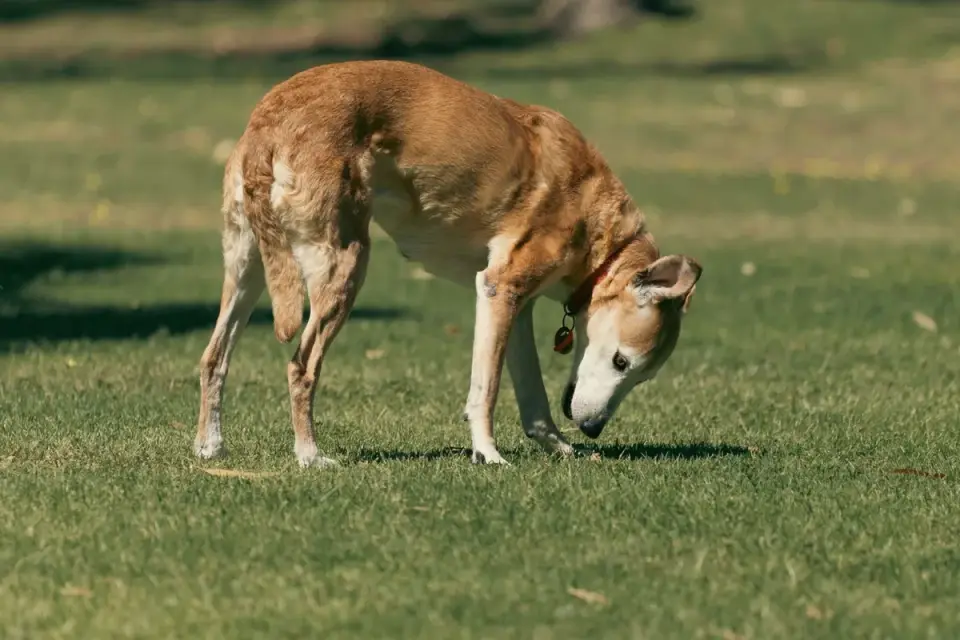
Fitness is not the same as cellular youth
The myth is that a dog who can still run has postponed aging. The reality is that outward performance compensates for early cellular change, then recovery shortens first: slower cool-down, next-day stiffness, lighter appetite after hard days, longer naps after excitement. Food therapy, omega-3s from diet, adequate protein for senior muscle, and consistent low-impact conditioning address that base better than any capsule.
A 9-year-old, 42-pound herding dog taught me the tradeoff. She worked sheepdog drills three evenings per week, and her owner added two antioxidant blends plus a training treat topper hoping to protect her joints. Within 18 days she developed soft stool, skipped two of nine weekly meals, and lost drive on the third drill night each week. We stopped everything, rebuilt plain food therapy and rest days, and her stool and work attitude normalized in a week. More ingredients had obscured the real problem, which was insufficient recovery time between hard sessions rather than missing molecules.
That case is why I reject stacking formulas on top of a heavy training schedule. If sleep, calories, pain screening, and periodization are off, supplements only add variables.
What these formulas may help support — and where evidence thins
Most senior longevity blends combine a NAD+ precursor with polyphenol antioxidants such as resveratrol or quercetin. In structure/function terms, they are positioned to support normal energy metabolism, cellular health, and resilience to everyday oxidative stress — not to treat arthritis, cognitive dysfunction, or cancer, and never as cures alongside oncology care.
The evidence tiers differ. NAD+ precursor biology is mechanistically coherent and heavily studied in laboratory systems, but canine functional trials with clinical endpoints remain limited. Polyphenols have antioxidant properties in vitro and in model organisms, yet translation to older dogs is thin and dose-sensitive. The Merck Veterinary Manual review of arthritis in dogs is a useful anchor here: it keeps the focus on weight, exercise modification, pain assessment, and veterinary diagnosis before any add-on. For background on flavonoid pharmacology, the National Library of Medicine reference on NAD+ and related metabolism helps explain why cellular claims sound plausible while still requiring canine data.
In practice, I prioritize candidates this way: first preserve lean mass and joint comfort through diet and movement, including acupuncture or rehabilitation when indicated; then consider a single, well-labeled cellular-support formula only for the dog with prolonged recovery despite good management; then reassess in 4–6 weeks on predefined markers such as morning stiffness minutes, willingness to climb, or rest needed after a standard walk.
A 14-year-old small terrier mix showed where the usual advice bends. Retired from 2-mile walks, she managed only six short house-block strolls per week and tired after 0.25 miles, with nighttime restlessness three nights out of seven. Pushing activity, the standard prescription, worsened her next-day function. We instead cut distance, added midday food-therapy meals, gentle acupuncture, and daytime mental enrichment, then discussed a simple antioxidant-containing senior plan with her veterinarian. Within three weeks she slept through five of seven nights and greeted the leash again, not because she got younger but because the plan matched a frail senior rather than an athlete.
For related senior care, many owners also ask about Wild Salmon vs. Fish Oil Supplements for a Senior Dog’s Brain when appetite and cognition shift, and about Best Supplements to Support a Senior Dog’s Immune System when recovery slows. Palatability questions come up often, including Can You Crush a Longevity Chew and Sprinkle It on Senior Dog Food?
A practical sequence before you buy
Start with veterinary screening, including pain, cardiac, metabolic, and neurologic checks, because reduced recovery is a symptom before it is a supplement deficiency.
Tune the base for two weeks: steady protein, healthy weight, warm-up and cool-down, one full rest day after hard effort, and cool-season adjustments discussed in Does Cold Weather Really Make a Senior Dog Stiffer and Slower?
Add one change at a time.
Stop what does not move a marker you can observe.
That restraint is integrative care: use food, movement, hands-on modalities, and, only when indicated, a modest supplement that may help support normal function while oncology and geriatric evidence catch up.
Frequently asked questions
Does my active senior dog need a longevity supplement to stay active?
No, activity itself plus diet, weight control, and pain screening maintain most function. Consider a cellular-support formula only if recovery lags despite good management, and review it with your veterinarian in structure/function terms.
Do NAD+ precursors give dogs more energy?
They are not stimulants and do not add years. They are studied for roles in normal cellular energy metabolism, which is why some owners discuss them for recovery support rather than performance.
What should I try before a longevity chew?
Veterinary examination, consistent warm-up and cool-down, rest days, healthy body condition, adequate protein, and sleep routine. Track morning stiffness, appetite after hard days, and rest needed after a standard walk for 2-4 weeks first.
Sources
- NIH Office of Dietary Supplements — NIH Office of Dietary Supplements
- National Library of Medicine — National Library of Medicine