On this page
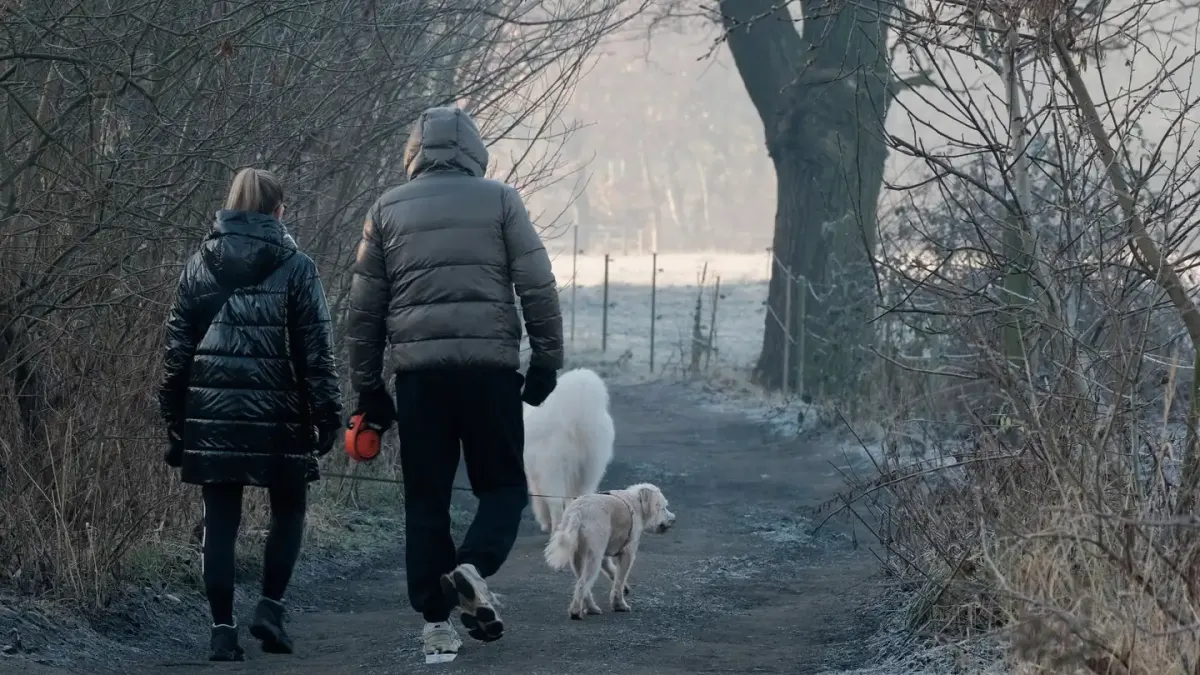
A common question this time of year is whether the cold itself is doing something harmful to an older dog’s joints. It isn’t, not directly — the frost outside doesn’t corrode cartilage or inflame a hip overnight. What’s actually happening is more mechanical, and once you see the pieces, the pattern most families describe stops feeling mysterious.
Checklist: what to watch for before you worry
- First-few-steps stiffness that visibly loosens up within five to ten minutes of walking
- Reluctance to jump on furniture or take stairs, especially first thing in the morning
- A dog who seems fine indoors but slows dramatically the moment cold air hits
- Stiffness that doesn’t ease with movement, or that’s paired with limping, whimpering, or reduced appetite
- A noticeable difference on damp, blustery days compared with clear, cold ones
The first four items are common and usually manageable at home. The fifth deserves a phone call to your veterinarian, not a wait-and-see approach — persistent pain in an older dog is a quality-of-life issue, and it’s one we can usually soften.
What cold actually does to a joint
Synovial fluid — the natural lubricant inside a joint — thickens somewhat in colder temperatures, and a thicker fluid doesn’t cushion movement quite as smoothly. At the same time, blood vessels near the skin and extremities constrict to conserve core body heat, and that reduced circulation can leave muscles around the joint tighter and less forgiving. Neither change is dangerous on its own. In a joint already dealing with arthritis, though, they stack on top of existing inflammation and worn cartilage, and the result is a dog who looks noticeably slower before ten in the morning.
Some of this may also come down to pressure, not just temperature. Falling barometric pressure ahead of a cold front is associated with tissue swelling around already-sensitive joints, and researchers writing about canine osteoarthritis note this as a plausible, though not universally agreed-upon, mechanism, per Cornell University College of Veterinary Medicine. It’s one reason a dog can seem worse on a raw, damp day than on a sunny one that’s just as cold.
Cold-weather stiffness versus a true arthritis flare
It helps to think of these as related but distinct pictures, since they call for different responses.
Ordinary cold-weather stiffness tends to show up at the start of activity and fade with gentle movement — a dog who’s slow off the porch but walking normally by the second block. It’s uncomfortable, but it isn’t usually a sign that anything has gotten structurally worse overnight.
A true arthritis flare looks different. The stiffness doesn’t resolve with walking, may worsen through the day, and often comes with subtler signs families miss at first: a dog who’s quieter than usual, slower to greet people, or hesitant about stairs they managed fine last month. According to PetMD, cold, damp air tightening muscles and slowing circulation is a documented part of why arthritic dogs feel worse in winter — but that source also stresses that cold isn’t creating new disease, only amplifying what’s already there.
What actually helps
None of this is about fighting winter. It’s about meeting the dog where the season has put them, and making the next few months easier to move through.
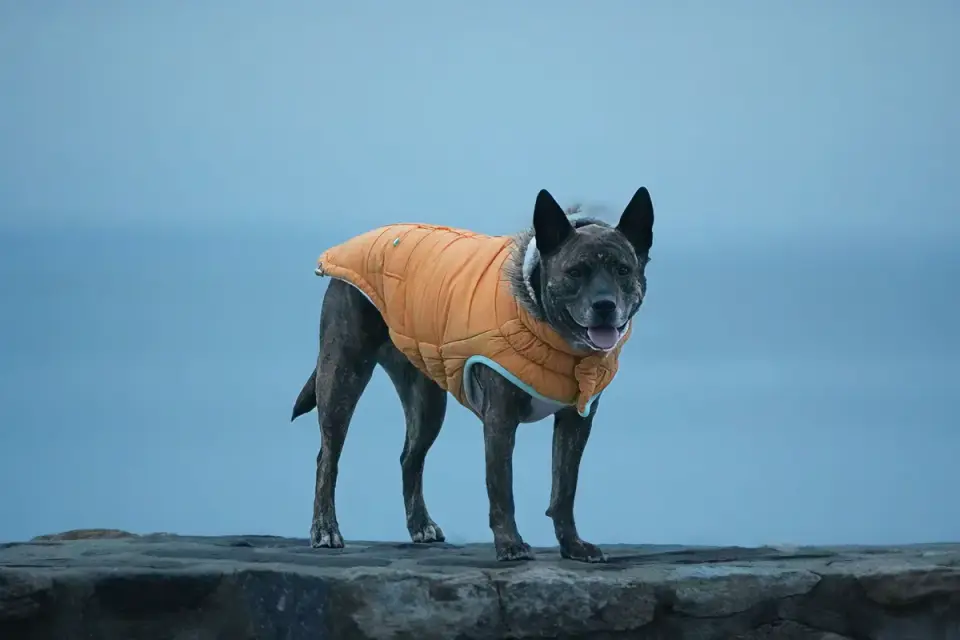
Keeping a senior dog warm — a properly fitted coat outdoors, a heated or orthopedic bed indoors, and limiting long stretches on cold tile or concrete — may help support comfort by easing the muscle guarding that cold brings on. Shorter, more frequent walks tend to serve an arthritic dog better than one long outing in the cold, since gentle, consistent movement keeps joints from stiffening between activity. Traction matters too: ice and slick pavement are a real fall risk for a dog whose gait is already less certain.
If you’re also noticing changes in energy or alertness alongside the stiffness, it’s worth reading about why an old dog startles at sounds he used to ignore and what’s behind an energy drop after a dog turns eight — aging rarely shows up in just one system at a time, and looking at the whole picture usually serves the dog better than treating each sign alone. Some families managing cognitive changes alongside joint stiffness also ask about supplement support like MCT oil; that’s a separate conversation worth having with your vet, covered in our guide on MCT oil and senior cognitive decline.
When to bring it to your veterinarian
A short exam can tell the difference between winter stiffness and a flare that needs attention — joint palpation, a gait assessment, sometimes X-rays if the picture is unclear. This isn’t about chasing a cure for arthritis, because there isn’t one; it’s about protecting comfort and quality of life for however many good years are still ahead. If your dog’s stiffness lingers past the first few minutes of a walk, worsens over the season, or comes with signs of pain, that’s the moment to call rather than wait out the winter.
The practical next step is simple: keep a rough log for a week or two — what the weather was, how the first walk went, whether things eased or stayed hard. That small record tells your veterinarian more than a single office visit ever could, and it’s usually all it takes to build a comfort plan that actually fits the dog in front of you.
Frequently asked questions
Is it normal for a senior dog to be stiffer in winter, or should I call the vet?
Some slowing on cold mornings is common and often eases within the first walk. Stiffness that doesn't loosen with movement, lasts most of the day, or comes with limping deserves a veterinary exam rather than a wait-and-see approach.
Do dog coats and heated beds actually help joint stiffness?
They may help support comfort by easing the muscle guarding and blood-vessel constriction that cold brings on, per veterinary guidance on winter arthritis care from PetMD. They aren't a treatment for the underlying joint disease, but many families notice an easier first walk of the day.
Can a young dog get 'winter stiffness' too, or is this only a senior issue?
Cold-related stiffness is far more noticeable in dogs who already have some joint wear, which is why it shows up most in seniors and in breeds prone to early arthritis. A young, healthy dog can still slow down in extreme cold, but it's usually about energy conservation, not joint pain.
Sources
- Dog Arthritis and Cold Weather: Helping Your Dog's Arthritis Pain in Winter — PetMD
- Osteoarthritis — Cornell University College of Veterinary Medicine